



What's Happening?
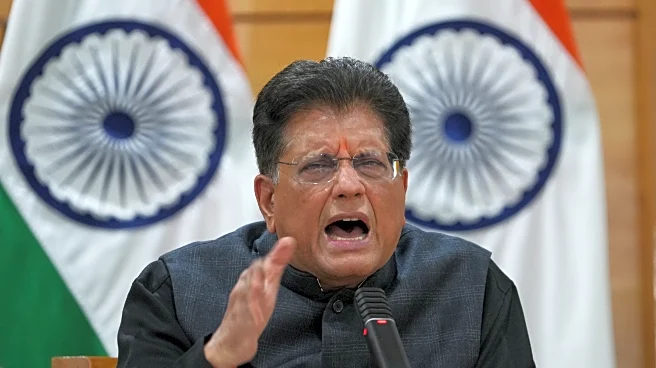
Despite assurances from the Indian government, concerns persist over the agricultural terms of the India-US trade agreement. Commerce Minister Piyush Goyal stated that sensitive sectors are protected, but experts worry about the impact of zero-duty imports
on Indian farmers. The agreement includes tariff reductions on US industrial goods and a range of agricultural products, potentially boosting US exports to India. However, vague terms like 'additional products' and the inclusion of items already available in India have raised doubts about the deal's implications for domestic agriculture.
Why It's Important?
The trade agreement is a pivotal moment for India-US economic relations, aiming to enhance trade and cooperation. However, the concerns raised highlight the challenges of balancing trade liberalization with domestic protection. The potential influx of US agricultural products could impact Indian farmers, raising questions about the deal's long-term sustainability. For the US, the agreement offers an opportunity to increase exports, but it must navigate the complexities of India's agricultural market. The outcome of this agreement will have significant implications for both countries' economic strategies and trade policies.
What's Next?
As the agreement is implemented, the Indian government will need to address the concerns raised by experts and stakeholders. Ensuring that the deal benefits Indian farmers while expanding trade opportunities will be crucial. Further negotiations are expected to refine the agreement and address any ambiguities. Both countries will continue to work towards a comprehensive trade agreement, focusing on reducing barriers and enhancing economic cooperation. The political and economic landscape will be closely monitored as the agreement progresses.