
What's Happening?
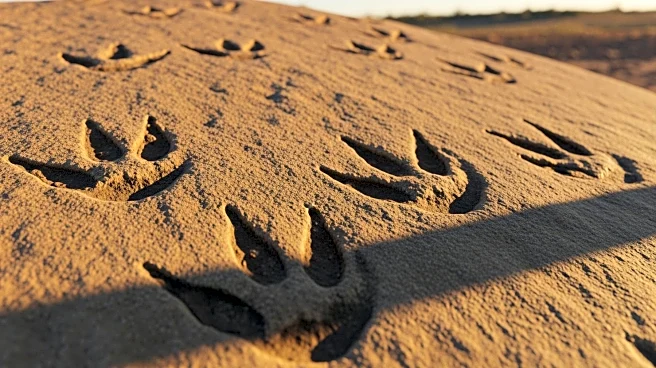
A team of paleontologists, primarily from California's Loma Linda University, has documented 16,600 dinosaur footprints in Toro Toro National Park, Bolivia. This discovery, published in the journal PLOS
One, represents the largest collection of theropod footprints globally. The footprints, left by dinosaurs such as the Tyrannosaurus rex, were preserved in ancient lake-bottom sediments. The site offers a unique glimpse into dinosaur behavior, showing evidence of both walking and swimming attempts. Despite the abundance of footprints, the area lacks dinosaur bones, possibly due to human activity or natural causes.
Why It's Important?
This discovery provides a significant window into the lives of dinosaurs, offering insights into their behavior and movement patterns. The preservation of these footprints allows scientists to study dinosaur interactions and environmental conditions during the Cretaceous period. The findings highlight the importance of preserving such sites from human interference, as they hold valuable information about prehistoric life. This research could influence future paleontological studies and conservation efforts in similar regions.
What's Next?
Further research is expected to continue at the Toro Toro site, with scientists anticipating the discovery of more footprints. This ongoing study will likely enhance understanding of dinosaur ecology and behavior. Conservation measures may be implemented to protect the site from human activities that could damage these prehistoric records.