




What's Happening?
Reliability Engineering and System Safety (RESS), a peer-reviewed academic journal published by Elsevier, focuses on evaluating and enhancing the safety, reliability, and resilience of complex technological systems. The journal covers various high-hazard
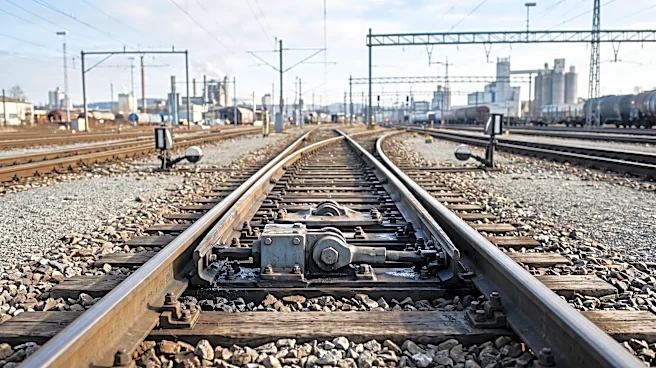
infrastructures, including transportation and infrastructure. Within this sector, RESS addresses critical issues such as railway signaling reliability, cascading power grid disruptions, and bridge seismic vulnerability. The journal emphasizes quantitative methodologies, including probabilistic risk assessment (PRA), quantitative risk analysis (QRA), and failure prevention. RESS is the official journal of both the European Safety and Reliability Association (ESRA) and the Safety Engineering and Risk Analysis Division (SERAD) of the American Society of Mechanical Engineers (ASME), connecting its research directly to major international conferences and tangible engineering challenges. Its scope extends to nuclear power, aerospace, offshore and maritime systems, chemical process plants, and cyber-physical automation, all areas where operational failure can lead to severe consequences.
Why It's Important?
The work published in RESS is crucial for U.S. industries and public policy, particularly in sectors dealing with critical infrastructure. By advancing modeling techniques for system safety and reliability, the journal helps engineers and policymakers mitigate risks associated with complex systems. For instance, research on railway signaling reliability directly impacts the safety of freight and passenger rail transport across the U.S., potentially preventing accidents and toxic derailments. Similarly, studies on power grid disruptions are vital for maintaining energy security and preventing widespread blackouts that can cripple economic activity. The focus on quantitative risk analysis provides a scientific basis for regulatory decisions and investment in infrastructure upgrades, ultimately protecting public safety, the environment, and economic stability. Industries such as transportation, energy, and chemical manufacturing stand to gain from these advancements by reducing operational risks and improving system resilience.
What's Next?
The ongoing research and publications in RESS will likely continue to influence safety standards and engineering practices in the U.S. Future developments may include more sophisticated predictive models for infrastructure failure, improved methods for assessing human reliability in complex operations, and enhanced strategies for system resilience against both natural disasters and cyber threats. As technology evolves, the journal is expected to feature emerging themes such as machine learning in risk analysis, climate adaptation for infrastructure, and autonomous system safety, which will be critical for the next generation of U.S. infrastructure projects. Stakeholders, including government agencies like the U.S. NRC and NASA, as well as private corporations in critical infrastructure sectors, will likely integrate these research findings into their operational guidelines and long-term planning to enhance safety and reliability.
Beyond the Headlines
The deeper implications of RESS's work extend to the ethical and societal dimensions of technological risk. The journal's rigorous quantitative approach underscores the importance of evidence-based decision-making in managing systems where failures can have catastrophic human and environmental costs. This scientific rigor can help counter public skepticism about complex technologies by providing transparent and verifiable safety assessments. Furthermore, the interdisciplinary nature of reliability engineering, as highlighted by RESS, fosters collaboration between engineers, scientists, and policymakers, promoting a holistic approach to risk management. The long-term shift could involve a greater emphasis on proactive risk mitigation rather than reactive responses to failures, leading to more resilient and safer national infrastructure that can withstand unforeseen challenges and protect communities more effectively.