





What's Happening?
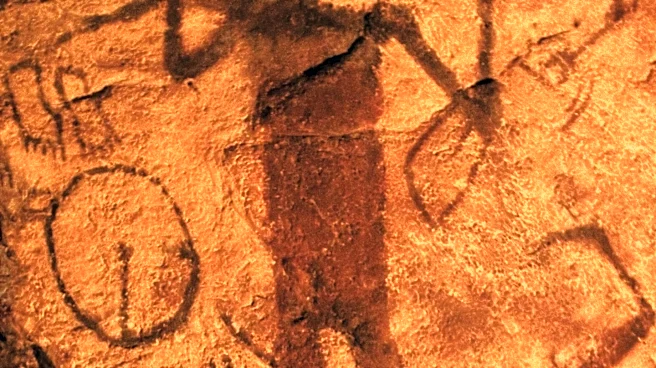
Researchers have successfully dated prehistoric paintings in the Font-de-Gaume cave in France using hidden charcoal within the pigments. This breakthrough allowed scientists to determine that parts of the artwork, including a bison and a mask-like figure,
were created during different periods. The bison was dated to the Upper Paleolithic era, while the mask showed evidence of being altered or added to over thousands of years. This discovery challenges previous assumptions that these paintings were undatable due to the absence of organic carbon in the pigments.
Why It's Important?
This advancement in dating techniques provides a new tool for archaeologists to accurately date prehistoric art, offering insights into the cultural practices of ancient communities. By understanding the timeline of these artworks, researchers can better comprehend the social and cultural dynamics of the people who created them. This method could revolutionize the study of prehistoric art by allowing for more precise dating of other undatable figures, potentially reshaping our understanding of human history and the evolution of artistic expression.
What's Next?
The successful application of this dating method may lead to its use on other prehistoric artworks, providing a clearer picture of the timeline and cultural significance of ancient cave paintings. Researchers may explore the possibility of similar hidden charcoal in other sites, which could reveal more about the interactions and cultural exchanges between prehistoric communities. This could ultimately enhance our understanding of the development of human societies and their artistic endeavors over millennia.