
What's Happening?
U.S. Senators Jerry Moran and Roger Marshall, both Republicans from Kansas, are urging President Trump to reconsider a plan to temporarily increase ground beef imports. President Trump announced a proposal
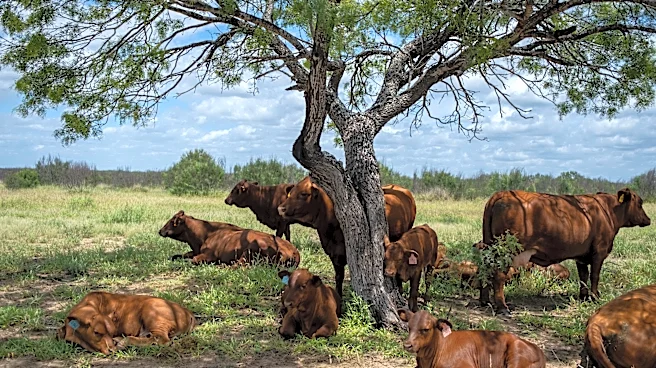
to allow up to 300,000 metric tons of beef for ground beef production to enter the U.S. over a 90-day period without the usual higher tariffs. Foreign exporters have reportedly committed to selling this beef at 25% below current market prices. The administration's stated goal is to reduce grocery costs and allow the domestic cattle herd to recover. However, Senators Moran and Marshall argue that importing discounted beef would negatively impact American cattle producers and discourage the expansion of the nation's herd. They emphasize that the current high beef prices are primarily due to the historically small U.S. cattle inventory, which has been affected by prolonged drought, high production costs, and limits on cattle imports from Mexico due to New World screwworm concerns. Marshall believes federal policy should focus on long-term solutions that encourage ranchers to expand their herds rather than flooding the market with imports.
Why It's Important?
This issue is significant for the U.S. agricultural industry, particularly the cattle sector. The proposed import plan, while intended to lower consumer prices, could undermine the financial stability of American ranchers. By introducing a large volume of below-market-price beef, domestic cattle prices could face further downward pressure, making it less profitable for ranchers to rebuild their herds. The U.S. cattle inventory is currently at its lowest level in decades, and a sustained period of profitability is crucial for ranchers to invest in expansion. If the plan proceeds, it could exacerbate existing challenges for an industry already grappling with economic forces and natural disasters. While consumers might see a temporary reduction in ground beef prices, the long-term health and sustainability of the domestic beef supply chain could be jeopardized, potentially leading to greater reliance on foreign imports and less food security in the future. The debate highlights a tension between immediate consumer relief and the long-term viability of a critical domestic industry.
What's Next?
President Trump is expected to sign an executive order formalizing the temporary tariff change within two weeks. The administration has not yet identified the countries that will supply the additional beef. Cattle organizations have already voiced criticism, aligning with the concerns raised by Senators Moran and Marshall, arguing that these imports could reduce cattle prices and remove the financial incentive for ranchers to rebuild their herds. Kansas State University agricultural economist Glynn Tonsor suggests that the proposed amount of imports, representing about 3% of annual U.S. beef consumption, might be too small to significantly affect retail prices. However, the impact on producer prices and the psychological effect on the market could still be substantial. The coming weeks will likely see continued debate and lobbying efforts from agricultural groups and lawmakers as the executive order is finalized and the source countries for the imported beef are announced.
Beyond the Headlines
The discussion surrounding beef imports touches upon broader themes of trade policy, food security, and the balance between consumer interests and producer welfare. The administration's move to lower grocery costs through imports reflects a common political strategy to address inflation, but it also exposes the vulnerabilities of domestic agricultural sectors to global market fluctuations and policy interventions. This situation could set a precedent for how the U.S. government responds to commodity price increases in other agricultural sectors. Furthermore, the emphasis on the 'smallest cattle herd of my lifetime' by Senator Marshall underscores the long-term impact of environmental factors like drought and economic pressures on agricultural production. The debate also implicitly raises questions about the resilience of the U.S. food supply chain and the extent to which it should be protected from foreign competition, even when aiming for short-term consumer benefits. The quality and safety inspection processes for imported beef, as mentioned by some stakeholders, could also become a point of contention.