





What's Happening?
African leaders have expressed confidence in a $25 billion energy project aimed at transporting Nigerian gas to Europe via a pipeline stretching from Nigeria to Morocco. The project, supported by the Economic Community of the West African States (ECOWAS),
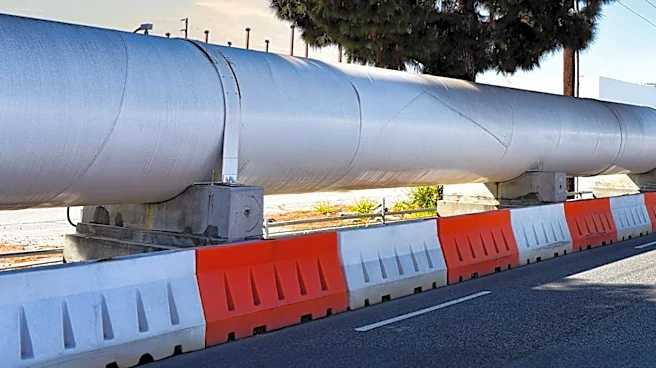
involves a 6,800-kilometer pipeline that will pass through 13 countries before connecting to European networks. The initiative has gained renewed interest from Europe due to energy concerns linked to Middle East conflicts. Nigeria and Morocco have completed important technical studies and are moving towards a formal intergovernmental agreement.
Why It's Important?
The Nigeria-Morocco pipeline project represents a significant infrastructural development that could enhance energy security for Europe and boost economic growth in West Africa. By providing a new route for gas exports, the project could reduce Europe's reliance on other energy sources and strengthen economic ties between Africa and Europe. For Nigeria, the project offers an opportunity to increase its gas exports and generate revenue, potentially offsetting losses from reduced oil production. The initiative also highlights the strategic importance of African energy resources in global markets.
What's Next?
With the backing of ECOWAS and progress in technical studies, the project is moving closer to implementation. The next steps involve finalizing the intergovernmental agreement and securing financing for the pipeline's construction. The project's success will depend on continued cooperation between Nigeria, Morocco, and European stakeholders, as well as addressing any geopolitical or logistical challenges that may arise. The development could set a precedent for future energy projects in the region.