


What's Happening?
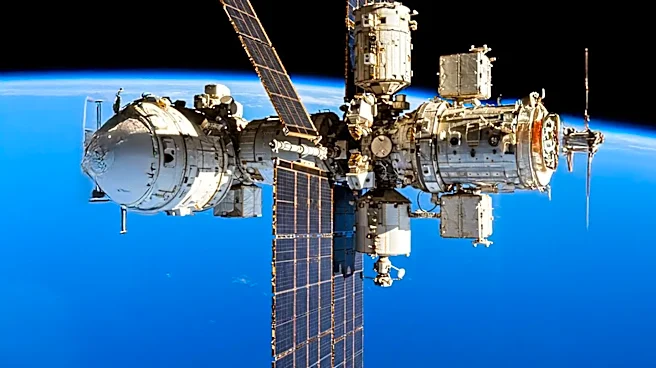
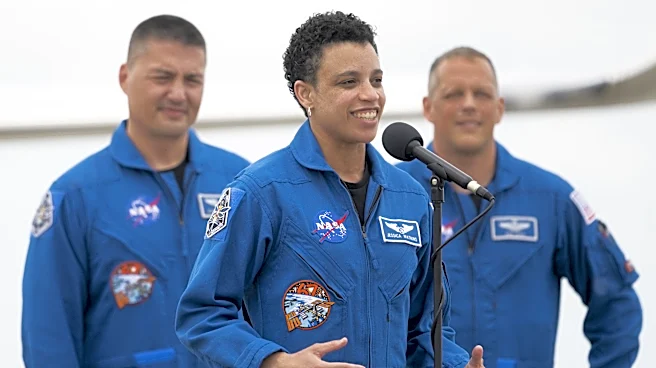
Indian-origin NASA astronaut Anil Menon, alongside Canadian astronaut Joshua Kutryk, successfully completed a nearly seven-hour spacewalk outside the International Space Station (ISS) on November 5, 2026 (US time). This operation, designated US Spacewalk
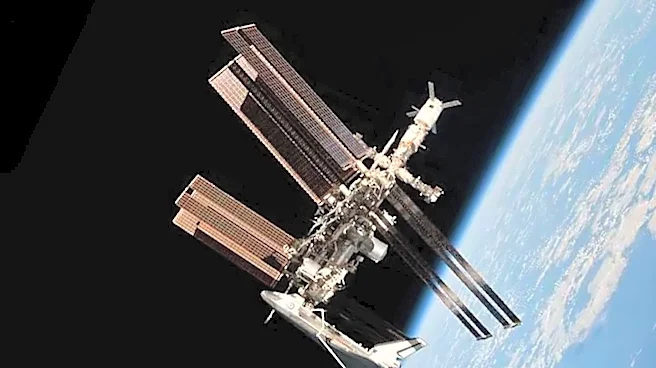
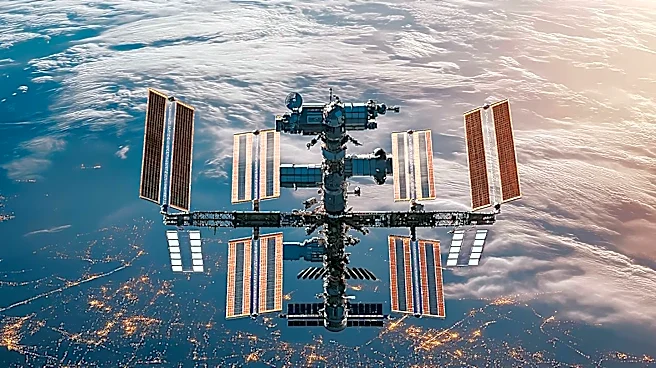
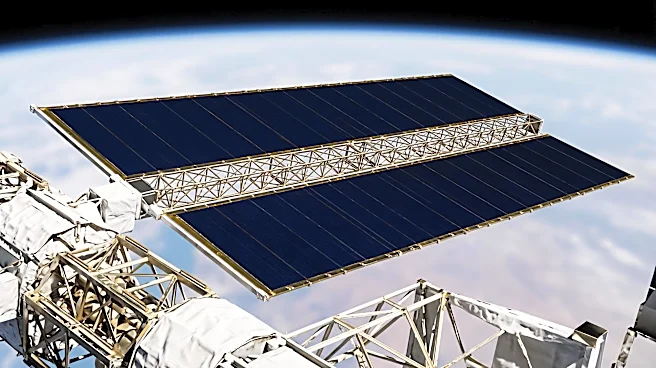
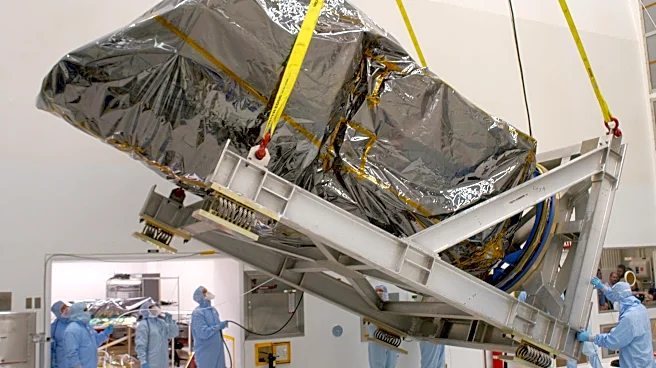
101, marked Menon's fifth spacewalk and Kutryk's second. Their primary objective was to install and unfurl the eighth and final International Space Station Roll-Out Solar Array (IROSA). These innovative arrays are designed to deploy in space to capture sunlight and generate electricity for the orbiting laboratory. The completion of this spacewalk signifies the culmination of a power-upgrade program that commenced in February 2021, involving a total of 18 spacewalks to prepare the station and install the new arrays. The operation concluded at 2:05 am IST on November 6, according to NASA.
Why It's Important?
The successful installation of the final IROSA is crucial for the continued operation and scientific endeavors aboard the ISS. This upgrade is projected to increase the station's electricity-generating capacity from 160 kilowatts to approximately 215 kilowatts. This enhanced power supply is vital for meeting the growing demands of ongoing scientific experiments and maintaining the station's complex onboard systems. The increased power allows for more extensive research, potentially leading to breakthroughs in various scientific fields. Furthermore, the completion of this multi-year project ensures the long-term viability and functionality of the ISS as a platform for international space collaboration and scientific discovery, directly impacting the U.S. space program and its partners.
What's Next?
With the power upgrade program now complete, the International Space Station is better equipped to support future missions and scientific research. The enhanced power capacity will enable more ambitious experiments and potentially extend the operational lifespan of the station. For astronaut Anil Menon, this spacewalk adds to his significant experience in orbit, contributing to his ongoing mission which began on July 14, 2026, aboard Russia's Soyuz MS-29 spacecraft. The focus will now shift to maximizing the utilization of the increased power for scientific output and maintaining the newly installed arrays. Future activities on the ISS will likely leverage this expanded power capability for advanced research and technological demonstrations.
Beyond the Headlines
The successful completion of this complex power upgrade highlights the critical role of international collaboration in space exploration. Astronaut Menon's Indian heritage also underscores the increasing diversity within the global astronaut corps and the contributions of individuals from various backgrounds to space endeavors. The IROSA technology itself represents an advancement in space power generation, offering a more compact and deployable solution compared to traditional rigid solar panels. This could have long-term implications for future spacecraft design and deep-space missions, where efficient power generation and deployment are paramount. The project also demonstrates the continuous effort required to maintain and upgrade aging space infrastructure to ensure its functionality and safety.