

What's Happening?
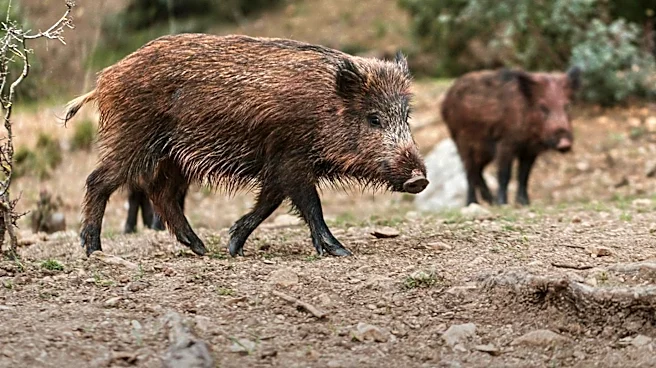
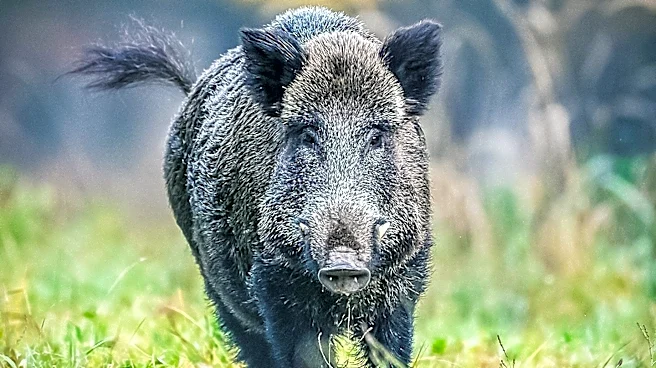
The Georgia Department of Natural Resources (DNR) is highlighting the significant issues caused by feral hogs, an invasive species in the state. These animals are responsible for extensive damage to native flora and fauna, agricultural crops, livestock,
and forest regeneration. Despite the popularity of sport hunting for feral hogs, the DNR emphasizes that this method is rarely effective in controlling their populations or mitigating the damage they cause. The department provides resources such as the 'Georgia Landowner’s Guide to Wild Pig Management' and a video series from the Georgia Association of Conservation Districts to educate the public on identification, biology, behavior, damage, and control methods for feral hogs. This initiative aims to equip landowners and the public with better tools and knowledge to manage this pervasive problem.
Why It's Important?
The widespread damage inflicted by feral hogs has significant economic and ecological implications for Georgia. Agriculturally, the destruction of crops and harm to livestock can lead to substantial financial losses for farmers, impacting the state's agricultural output and economy. Ecologically, the disruption of native flora and fauna threatens biodiversity and ecosystem health, potentially leading to long-term environmental degradation. The ineffectiveness of sport hunting as a primary control method underscores the need for more comprehensive and strategic management approaches. By providing educational resources, the DNR is attempting to empower landowners and communities to implement more effective control measures, which is crucial for protecting Georgia's natural resources and agricultural industry from the ongoing threat posed by these invasive animals.
What's Next?
The Georgia Department of Natural Resources will likely continue to promote and update its educational resources for feral hog management, encouraging landowners to adopt more effective control strategies beyond recreational hunting. Future efforts may include further collaboration with organizations like the Georgia Association of Conservation Districts to develop and disseminate advanced management techniques. There could also be an increased focus on research into more efficient and sustainable methods for population control, potentially leading to new policies or programs aimed at reducing the ecological and economic impact of feral hogs across the state. The ongoing challenge will be to shift public perception and practices towards more impactful management solutions.
Beyond the Headlines
The issue of feral hog management in Georgia extends beyond immediate agricultural and ecological damage, touching upon broader themes of invasive species control and human-wildlife interaction. The popularity of sport hunting, while providing recreational value, often creates a complex dynamic where the perceived benefit of hunting can overshadow the need for more aggressive population control measures. This highlights a common challenge in conservation: balancing recreational interests with ecological imperatives. The long-term implications include potential shifts in land use practices, increased investment in fencing and protective measures, and a continuous need for public education to foster a collective responsibility in managing invasive species. The situation also underscores the interconnectedness of ecosystems and the far-reaching consequences of introducing non-native species.