



What's Happening?
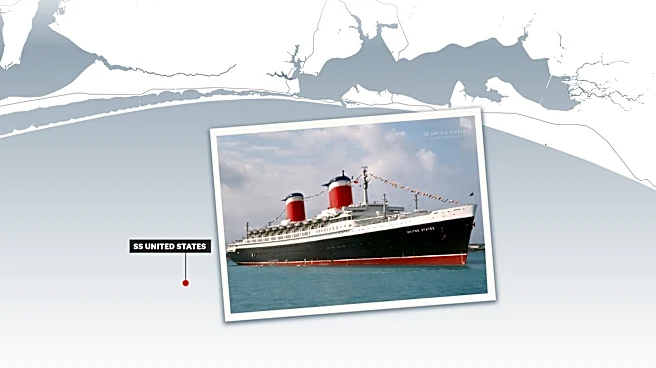
The SS United States, once a prominent ocean liner with historical ties to Newport News, has been intentionally sunk off the coast of Florida to serve as the world's largest artificial reef. This action follows decades of disrepair and an uncertain future
for the vessel. Built in Newport News between 1950 and 1952, the ship was the fastest ocean liner to cross the Atlantic and the largest constructed entirely in the U.S. Its construction cost $71.8 million at the time, equivalent to over $700 million today, partly funded by the Navy for potential use as a troop transport. While the ship now rests on the ocean floor, its historic bell, considered its most precious component, is preserved at Christopher Newport University (CNU) in Newport News. The bell, purchased for $30,000 at a 1984 auction by Dr. Sarah E. Forbes, now hangs in a bell tower at Hoinkes Plaza on the CNU campus and is occasionally rung by graduating students. Other artifacts from the SS United States are held at The Mariners’ Museum and Park.
Why It's Important?
The sinking of the SS United States marks the end of an era for a vessel that symbolized post-war American industrial might and luxury travel. Its transformation into an artificial reef highlights a growing trend in marine conservation, repurposing large structures to create new ecosystems and boost marine life. For Newport News, the preservation of the ship's bell and other artifacts at CNU and The Mariners’ Museum and Park maintains a tangible link to its shipbuilding heritage and the vessel's significant role in American history. This connection is important for local identity and historical education, reminding residents and visitors of the city's contributions to maritime innovation. The ship's dual legacy as a luxury liner and a potential military transport also underscores the intertwined nature of commercial and defense industries in the mid-20th century, reflecting a period of national pride and strategic foresight.
What's Next?
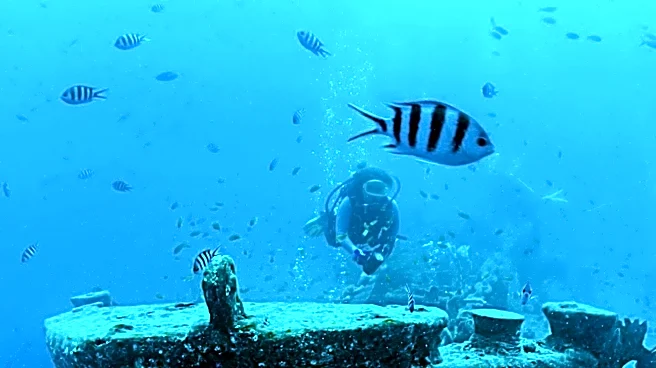
Officials from Okaloosa County, Florida, invested over $10 million to acquire, transport, and prepare the SS United States for its new role as a tourism-driving dive spot. The sinking was broadcast nationally, indicating significant public interest in this transformation. The ship's removed smokestacks are expected to be used as walls for a dedicated museum, further preserving its legacy and providing an educational component. The ongoing presence of the ship's bell at Christopher Newport University ensures that its 'sounds' can still be heard, maintaining a living connection to its past. The Mariners’ Museum and Park will continue to display its hulking bronze propeller and a photography collection, offering additional opportunities for the public to engage with the ship's history. This initiative is expected to create a new home for marine life, building ecosystems and supporting the marine world, while also attracting divers and tourists to the Florida coast.
Beyond the Headlines
The story of the SS United States reflects broader themes of industrial decline, the evolution of transportation, and the repurposing of historical assets. Its retirement in 1969, largely due to the rise of jet travel, illustrates how technological advancements can rapidly render once-dominant industries obsolete. The ship's journey through various owners with failed redevelopment plans, and its multiple seizures by U.S. Marshals due to delinquent fees, highlight the challenges of preserving large, complex historical artifacts without clear economic viability. The ultimate decision to transform it into an artificial reef represents a pragmatic and environmentally conscious approach to conservation, turning a decaying relic into a vibrant marine habitat. This shift from a symbol of human achievement to a foundation for natural ecosystems offers a powerful narrative about adaptation and the enduring value of historical objects, even in new forms.