



What's Happening?
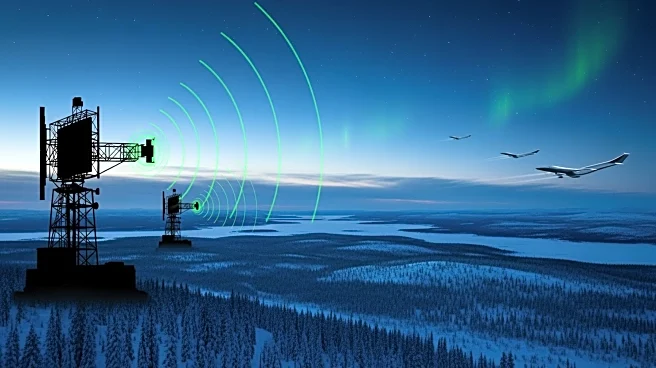
The North American Aerospace Defense Command (NORAD) intercepted two Russian Tu-142 maritime patrol aircraft operating within the Alaskan and Canadian Air Defense Identification Zones (ADIZ). The Russian aircraft remained in international airspace and did
not enter U.S. or Canadian sovereign airspace. NORAD deployed a combination of U.S. and Canadian fighter jets, including F-35s, F-22s, and CF-18s, along with support aircraft, to monitor and intercept the Russian planes. This activity is part of regular Russian operations in the region and is not considered a direct threat, according to NORAD.
Why It's Important?
The interception underscores ongoing military vigilance and the strategic importance of the Arctic region. Regular Russian military activity near North American airspace highlights geopolitical tensions and the need for robust defense capabilities. The presence of Russian aircraft in the ADIZ necessitates a coordinated response from NORAD, showcasing the importance of U.S.-Canada defense collaboration. This incident also reflects broader global military dynamics, where nations assert their presence in strategically significant areas, potentially impacting international relations and defense policies.
What's Next?
NORAD will likely continue to monitor and respond to similar activities, maintaining readiness to protect North American airspace. The incident may prompt discussions on enhancing defense capabilities and strategies in the Arctic region. Additionally, it could influence diplomatic engagements between the U.S., Canada, and Russia, as well as discussions within NATO regarding collective security measures. Stakeholders, including military and government officials, may evaluate current defense protocols to ensure effective responses to future incursions.