




What's Happening?
John Cabot University's Institute of Future and Innovation Studies (IFIS) recently hosted a forum titled 'Control Space to Govern Earth: Space, Power and Information in the New Global Order.' The event, held on October 15, 2026, brought together experts
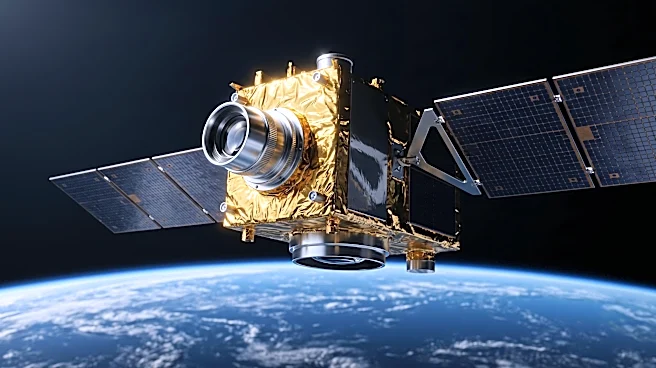
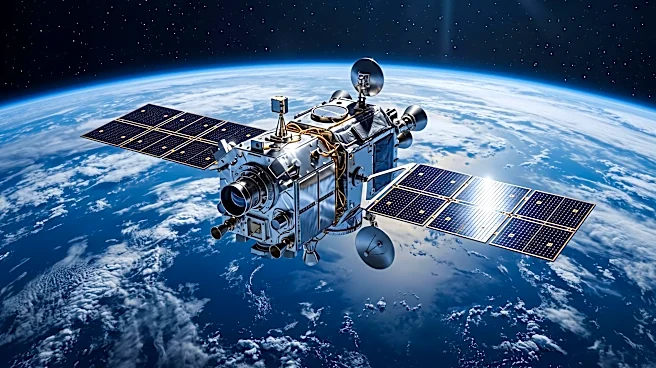
from the space industry, defense, European institutions, academia, cybersecurity, and journalism. The central theme of the forum was the transformation of space from a domain of exploration into a fundamental networked infrastructure essential for the functioning of modern societies. Francesco Lapenta, director of IFIS, emphasized that satellites, Earth-observation systems, navigation, telecommunications, artificial intelligence, and autonomous systems are increasingly interconnected with terrestrial critical infrastructures. This interconnectedness creates a complex web of dependencies that economies, institutions, and states rely upon. The forum explored this proposition through four main sessions: infrastructure, vulnerability, power, and perception, highlighting how control over space is increasingly synonymous with control over life on Earth.
Why It's Important?
The forum's discussions underscore a significant shift in how space is perceived and its growing importance to global stability and economic activity. The increasing reliance on orbital systems for telecommunications, navigation, financial synchronization, environmental observation, logistics, intelligence, and security means that disruptions in space can have cascading effects on terrestrial networks. This interconnectedness makes societies vulnerable to cyberattacks, interference with satellite communications, and failures in positioning services, impacting critical sectors like transport, finance, emergency services, and defense. The blurring lines between civilian, commercial, and military space infrastructures also raise complex questions about national security and strategic autonomy. As private operators take on roles traditionally held by governments, the distribution of launch capabilities, orbital positions, and access to data becomes a critical factor in geopolitical power dynamics, influencing sovereignty and international relations.
What's Next?
The insights from the forum suggest a continued need for interdisciplinary approaches to space policy and governance. As space becomes more integral to daily life and national security, future discussions will likely focus on developing robust international frameworks for space traffic management, cybersecurity in space, and responsible use of orbital resources. Stakeholders, including governments, private industry, and international organizations, will need to collaborate to address vulnerabilities and ensure the resilience of space-based infrastructure. The increasing role of artificial intelligence in interpreting satellite data also points to future challenges and opportunities in information governance and the ethical implications of AI-driven decision-making in critical sectors. The forum's emphasis on 'astropolitics' indicates that geopolitical competition will increasingly extend into space, necessitating new diplomatic strategies and international cooperation to prevent conflicts and ensure equitable access to space resources.
Beyond the Headlines
The forum's exploration of space as a 'networked infrastructure' reveals deeper implications beyond technological advancements. It highlights a fundamental redefinition of sovereignty, where a state's ability to govern its territory increasingly depends on external orbital infrastructures. This shift challenges traditional notions of territorial control and introduces new dimensions of strategic autonomy, focusing on control over critical dependencies rather than just physical borders. The informational dimension of orbital power, particularly how satellite imagery and AI shape public understanding of events, raises ethical questions about truth, perception, and the potential for manipulation. As space infrastructure becomes both an object of journalistic inquiry and a tool for understanding the world, there is a growing need for media literacy and critical analysis of space-derived information. This evolving landscape necessitates a holistic understanding that integrates engineering, economics, cybersecurity, law, geopolitics, and the humanities to navigate the complexities of this emerging space-earth system.