
What's Happening?
A new scientific review published in the Journal of Applied Physiology, conducted by Italian researchers Laura Leuci and Luca Carenzo, examines the mechanisms behind deaths in cold water and provides actionable
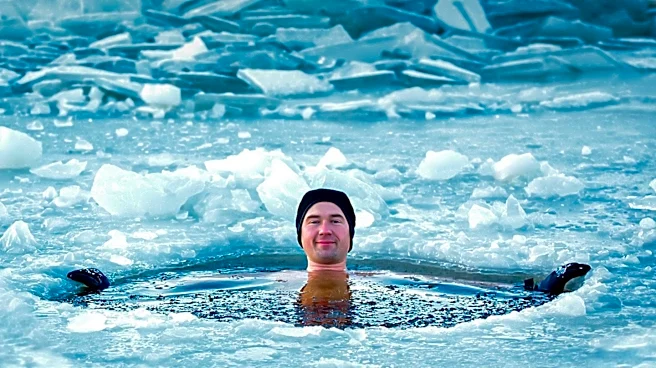
survival tactics. The review outlines four distinct stages of cold-water immersion dangers: the cold shock response, swimming failure, hypothermia, and circum-rescue collapse. The cold shock response, occurring immediately upon immersion in water below 15 degrees Celsius (59 degrees Fahrenheit), can cause involuntary gasping and hyperventilation, increasing drowning risk. Swimming failure follows as limbs lose function due to cold. Hypothermia sets in after about 30 minutes, leading to impaired decision-making and loss of consciousness. Finally, circum-rescue collapse refers to deaths occurring during or immediately after rescue, often due to sudden blood pressure drops or a 'parasympathetic surge' of relief.
Why It's Important?
This research is crucial for public safety, particularly for individuals engaging in water activities in cold environments. Understanding the distinct stages of cold-water immersion and their physiological impacts can significantly improve survival rates by informing better safety protocols and rescue techniques. For emergency services and water safety organizations, the findings provide evidence-based strategies for public education campaigns and training programs. The emphasis on 'Float to Live' and maintaining a horizontal position during rescue highlights practical, life-saving advice. This scientific clarity helps dispel common misconceptions about cold-water deaths, such as solely attributing them to hypothermia, and underscores the immediate dangers of cold shock and the complexities of post-rescue care. It also has implications for product development in personal flotation devices and cold-weather gear.
What's Next?
The findings from this review are expected to influence water safety guidelines and public awareness campaigns globally, including in the U.S. Organizations like the Royal National Lifeboat Institution (RNLI) already advocate for strategies like 'Float to Live,' which will likely see reinforced promotion. Further research may focus on developing more effective personal flotation devices that automatically position individuals for optimal survival during cold shock. Training for first responders and rescue teams will likely incorporate the nuances of circum-rescue collapse, emphasizing horizontal extraction techniques. Public education efforts will aim to inform individuals about the immediate dangers of cold water and the importance of habituation for those who regularly engage in cold-water activities, such as open-water swimming or surfing.
Beyond the Headlines
Beyond the immediate safety implications, this review sheds light on the intricate physiological responses of the human body to extreme environmental stressors. The concept of 'autonomic conflict' between the sympathetic and parasympathetic nervous systems during cold shock reveals the complex interplay of bodily systems under duress. The phenomenon of circum-rescue collapse also highlights the psychological and physiological vulnerabilities that can arise even at the point of perceived safety, underscoring the holistic nature of survival. This research contributes to a broader understanding of human resilience and vulnerability, informing not only water safety but also potentially other fields dealing with extreme conditions, such as mountaineering or space exploration. It also emphasizes the ethical imperative of scientific research in preventing preventable deaths.