


What's Happening?
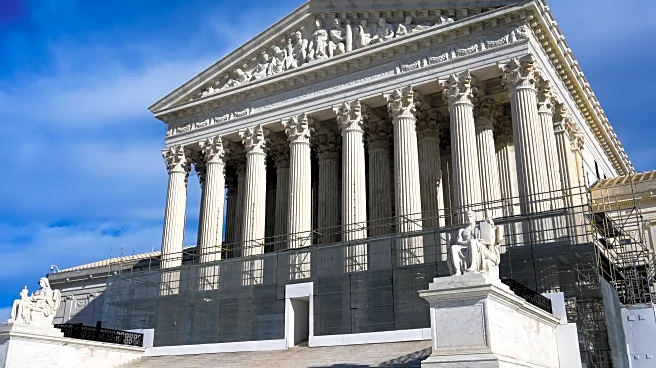
The United States Supreme Court has invalidated President Trump's use of emergency powers to impose broad tariffs, a key component of his economic strategy. The 6-to-3 decision challenges the presidential authority to unilaterally impose tariffs, which
were enacted in April 2025 under the International Emergency Economic Powers Act. Chief Justice John Roberts, writing for the majority, emphasized that the power to levy taxes and tariffs resides with Congress, not the President. The ruling does not specify whether the U.S. must reimburse the estimated $175 billion collected in tariffs or when the decision will take effect. President Trump has expressed his intent to reaffirm some tariffs through other legal avenues, despite the ruling.
Why It's Important?
This decision has significant implications for U.S. trade policy and the economy. The invalidation of these tariffs introduces uncertainty for businesses reliant on international trade, particularly shipping lines and importers who have already reported declines in trade volumes. The ruling underscores the constitutional limits on presidential power, reinforcing the role of Congress in trade matters. It also highlights the ongoing tension between executive actions and legislative authority, potentially affecting future administrations' trade strategies. The decision may lead to legal and economic adjustments as stakeholders navigate the new trade landscape.
What's Next?
In response to the ruling, President Trump has indicated plans to use alternative legal justifications to maintain some tariffs, potentially through Section 301 investigations by the U.S. Trade Representative's Office. This process could take time, prolonging uncertainty for businesses. Treasury Secretary Scott Bessent has also suggested exploring other legal avenues to uphold tariffs. The decision may prompt legislative action from Congress to clarify or redefine the scope of presidential authority in trade matters. Stakeholders, including trade organizations and state governments, will likely continue to monitor and influence these developments.