






What's Happening?
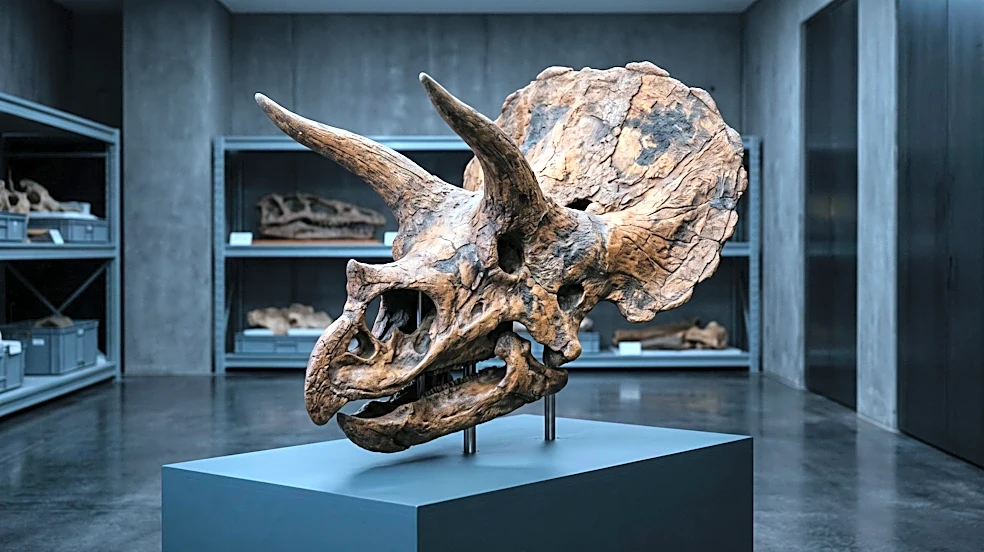
A 66-million-year-old triceratops skull, excavated in Montana, United States, is now housed in a climate-controlled environment at Fine Art Storage Services (FASS) in Singapore. This facility, often referred to as the 'Fort Knox of Singapore,' is located
within Le Freeport. Chaw Wei Yang, 26, who co-runs FASS, acquired the option for the fossil while it was still in the ground in Montana. The skull, described as one of the most complete triceratops skull fossils ever discovered, was dug up only a few months prior to its display in Singapore. Chaw expressed a universal appeal for dinosaurs, which motivated his collection, contrasting it with the subjective nature of art. The fossil was showcased during the lead-up to the Singapore Grand Prix, an event attended by ultra-high-net-worth individuals.
Why It's Important?
The storage of a significant U.S.-origin fossil in Singapore highlights the global nature of high-value asset collection and storage, particularly for items appealing to ultra-high-net-worth individuals. This event underscores Singapore's role as a secure and specialized hub for storing rare and valuable artifacts, including paleontological specimens. For the U.S., it signifies the continued export of unique natural heritage, even if for private collection and display abroad. The involvement of a young collector like Chaw Wei Yang also points to an emerging demographic of collectors interested in scientific and historical artifacts, potentially driving up demand and prices for such items globally. The 'Fort Knox' designation for the storage facility emphasizes the high level of security and environmental control required for preserving such ancient and fragile objects.
What's Next?
The triceratops skull is expected to remain a prominent feature within Fine Art Storage Services, potentially attracting further interest from collectors and paleontological enthusiasts. Its presence in Singapore could also encourage more high-value transactions and storage of similar unique artifacts from the U.S. and other parts of the world in specialized facilities. The owner, Chaw Wei Yang, may continue to expand his collection of dinosaur fossils, further solidifying Singapore's position as a hub for such unique assets. Future exhibitions or private viewings of the skull could also occur, especially around events that draw wealthy individuals, continuing to blend the worlds of ancient history and luxury asset management.
Beyond the Headlines
This event touches upon the ethical and cultural implications of privately owned paleontological discoveries. While the excavation and sale of fossils from private land in the U.S. are generally legal, the movement of such significant scientific specimens to private collections abroad raises questions about public access, scientific research, and the preservation of natural heritage. The 'universal appeal' of dinosaurs, as noted by Chaw, suggests a broad public interest that might not be fully served when such artifacts are held in private, secure facilities. It also highlights the growing market for 'trophy assets' among the ultra-rich, where items of immense historical and scientific value become commodities, potentially influencing future excavation practices and the accessibility of scientific discoveries.