
What's Happening?
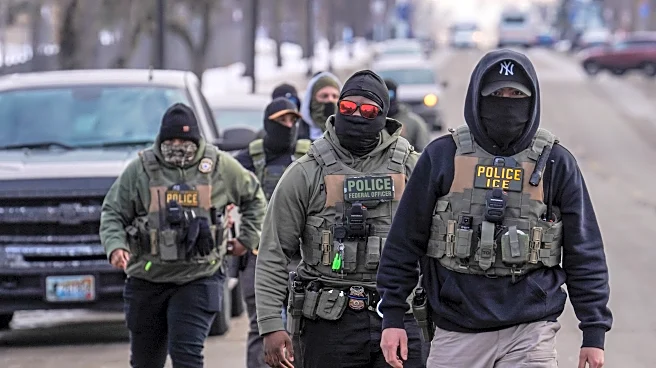
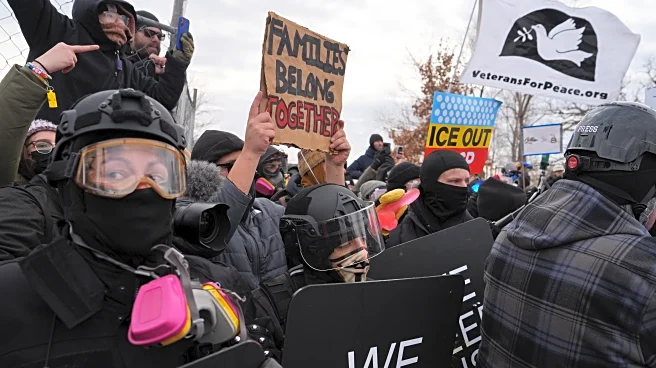
Labor unions in Minnesota are organizing an economic blackout to protest the increased presence of U.S. Immigration and Customs Enforcement (ICE) agents in the state. The protest, described as a 'day of truth
and freedom,' is a response to the federal government's intensified immigration enforcement under President Trump's administration. The Minneapolis Regional Labor Federation, along with several local unions and faith groups, is backing the initiative. The protest aims to disrupt normal economic activities by encouraging people to refrain from working or shopping, thereby sending a strong message against ICE's operations. This action follows a series of ICE raids that have reportedly targeted both noncitizens and citizens, causing widespread fear and disruption in the community. The protest is also a reaction to the recent killing of Renee Good, a 37-year-old mother, by an ICE agent, which has further fueled public outrage.
Why It's Important?
The economic blackout highlights the growing resistance against federal immigration policies perceived as aggressive and harmful to communities. By organizing such a large-scale protest, labor unions are leveraging their influence to draw attention to the social and economic impacts of ICE's actions. The protest underscores the tension between local communities and federal immigration enforcement, with potential implications for public policy and labor relations. Businesses in the area are also affected, as the presence of ICE has reportedly led to decreased foot traffic and economic activity. The protest serves as a call to action for broader societal engagement in immigration issues, emphasizing the need for policy reforms that consider the rights and well-being of all community members.
What's Next?
The protest is expected to take place near the U.S. Bank Stadium in Minneapolis, with organizers urging participants to demonstrate peacefully. The presence of ICE in Minnesota has already led to significant economic and social disruptions, and the protest aims to amplify these concerns. Local labor leaders are calling for a larger mobilization to pressure ICE to cease its operations in the state. The outcome of the protest could influence future actions by labor unions and community groups, potentially leading to more organized resistance against federal immigration policies. Additionally, the federal government's response to the protest, including any potential escalation of enforcement measures, will be closely watched.
Beyond the Headlines
The protest raises important questions about the role of federal agencies in local communities and the balance between national security and civil liberties. It also highlights the power of collective action in advocating for social justice and policy change. The involvement of labor unions in immigration issues reflects a broader trend of intersectionality in social movements, where different sectors of society unite to address common challenges. The protest could set a precedent for similar actions in other states, as communities across the country grapple with the implications of federal immigration policies.