







What's Happening?
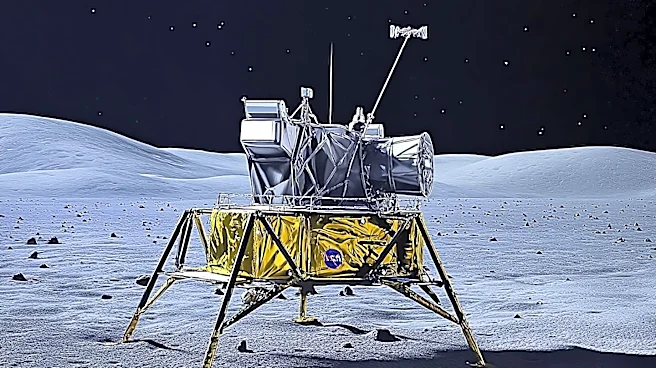
NASA has decided to terminate its lunar lander mission with Draper, a decision driven by significant delays in the spacecraft's development. The task order, known as CP-12, was initially valued at $73 million, with $43 million already paid to Draper for
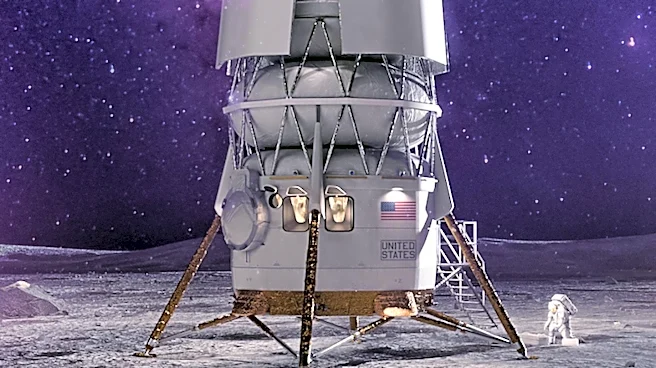
completed milestones. The mission, part of NASA's Commercial Lunar Payload Services (CLPS) program, faced multiple redesigns and engine changes, pushing the expected landing date to 2030 or 2031. Despite the cancellation, NASA remains committed to the scientific objectives of the mission and plans to deliver the developed instruments to the moon through future CLPS landings. The agency has awarded four new lunar lander missions to companies like Astrobotic, Firefly Aerospace, and Intuitive Machines, which may accommodate additional payloads.
Why It's Important?
The termination of the Draper mission highlights the challenges and complexities involved in lunar exploration and the development of space technology. This decision underscores the importance of meeting project timelines and the impact of delays on scientific and exploratory goals. For NASA, the move reflects a strategic shift to ensure that its lunar objectives are met through more reliable partnerships and technologies. The decision also affects Draper and its subcontractor, ispace-U.S., as they navigate the implications of the contract termination. The broader impact on the U.S. space industry includes potential shifts in partnerships and a reevaluation of project management strategies to avoid similar setbacks in future missions.
What's Next?
NASA will continue to focus on its lunar exploration goals through the Artemis program and other CLPS missions. The agency plans to integrate the scientific payloads from the Draper mission into future lunar landings, ensuring that the research objectives are still achieved. Companies involved in the newly awarded lunar lander missions will likely adjust their plans to accommodate these payloads. The termination may also prompt NASA and its partners to reassess project timelines and management practices to prevent future delays. As the space industry evolves, stakeholders will need to adapt to changing technologies and collaboration models to maintain progress in lunar exploration.