
What's Happening?
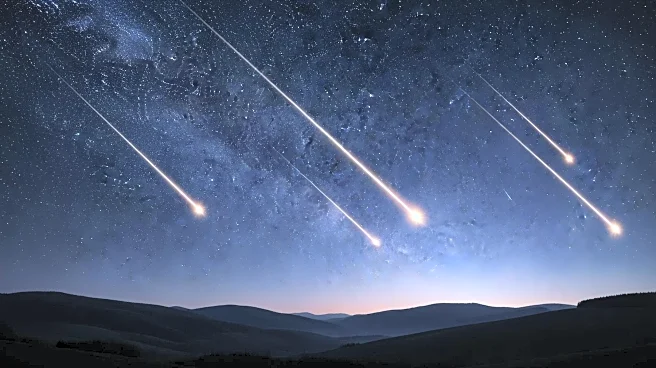
The Geminid meteor shower, one of the most anticipated celestial events of the year, is set to peak this weekend. Sky-gazers can expect to see dozens of meteors, including bright fireballs, streaking across
the night sky. The peak activity is expected from 10 p.m. ET Saturday through early Sunday morning. Under clear skies, suburban observers might see up to 20 meteors per hour, while those in darker rural areas could witness as many as one meteor per minute. The meteors will appear to radiate from the Gemini constellation, which is visible all night. The Geminids are known for their bright fireballs, which are more visible due to their slower speed compared to other meteor showers.
Why It's Important?
The Geminid meteor shower is significant as it provides a unique opportunity for both amateur and professional astronomers to observe a high volume of meteors. This event is particularly notable for its bright fireballs, which are easier to capture on camera due to their slower speed. The shower is a result of debris from the asteroid 3200 Phaethon, offering insights into the composition and behavior of such celestial bodies. For the general public, it is a chance to engage with astronomy and appreciate the natural wonders of the night sky, fostering interest in space science and exploration.
What's Next?
The Geminid meteor shower will continue to be visible for a few days following the peak, although the number of meteors will decrease. Observers are encouraged to view the shower before the peak, as the activity tends to drop off quickly afterward. The next major meteor shower, the Ursids, is expected to peak on December 21-22, providing another opportunity for sky-gazers to enjoy a celestial display. As the year ends, these events highlight the ongoing interest and excitement surrounding astronomical phenomena.