





What's Happening?
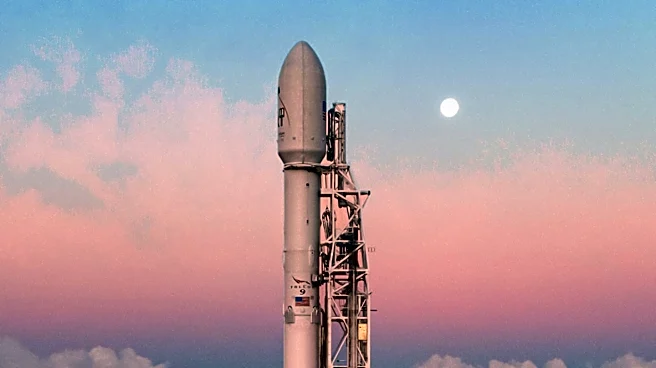
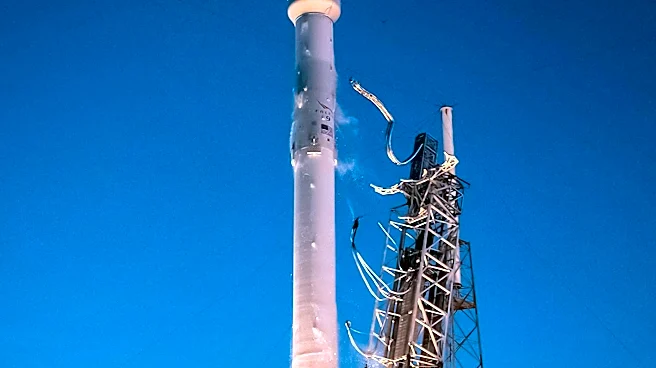
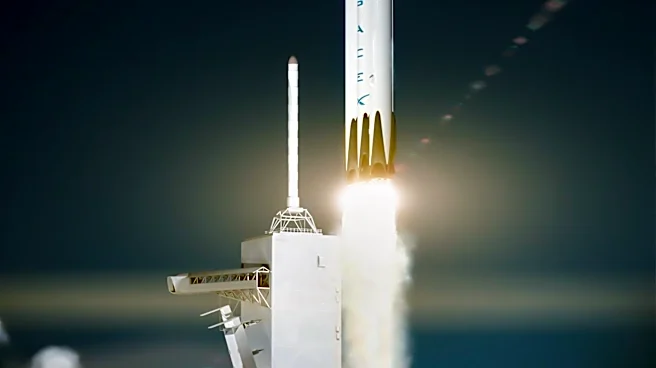
A discarded SpaceX rocket is on a collision course with the moon, expected to create a crater nearly 90 feet across and 16 feet deep. The rocket's upper stage, which launched two private lunar landers in January 2025, will impact near Einstein Crater
at a speed of 5,400 mph. One of the landers, Firefly Aerospace’s Blue Ghost, successfully touched down on the moon, while the other, Japan-based ispace’s lander, failed. NASA and South Korea’s Danuri orbiter will observe the impact. This event highlights the growing issue of space debris as more objects are sent into orbit.
Why It's Important?
The impending collision underscores the increasing problem of space debris, which poses a threat to future lunar missions and potential bases. As the U.S. and China race to land astronauts on the moon, managing space traffic and debris becomes crucial. The impact, while not immediately problematic, serves as a reminder of the need for better orbital management to prevent future hazards. The event also provides a unique opportunity for scientists to study the effects of human-made impacts on the lunar surface, which could inform future space exploration strategies.
What's Next?
Following the collision, NASA’s Lunar Reconnaissance Orbiter and South Korea’s Danuri orbiter will capture before-and-after images of the impact site. This data will help scientists assess the impact's effects and refine models for future debris management. As space exploration intensifies, international cooperation may be necessary to establish guidelines for debris mitigation and orbital traffic control. The incident may prompt discussions among space agencies and private companies about sustainable practices in space exploration.
Beyond the Headlines
The collision raises ethical and logistical questions about humanity's responsibility in space. As lunar exploration becomes more frequent, the potential for accidental impacts increases, necessitating a reevaluation of current practices. The event could lead to long-term shifts in how space missions are planned and executed, emphasizing the importance of sustainable exploration. Additionally, it highlights the need for international collaboration in space governance to ensure the safety and success of future missions.