


What's Happening?
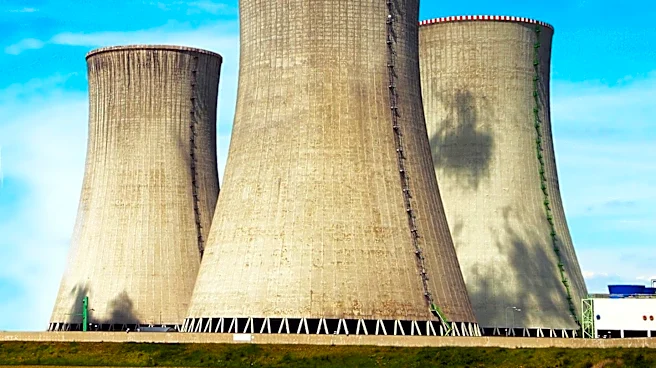
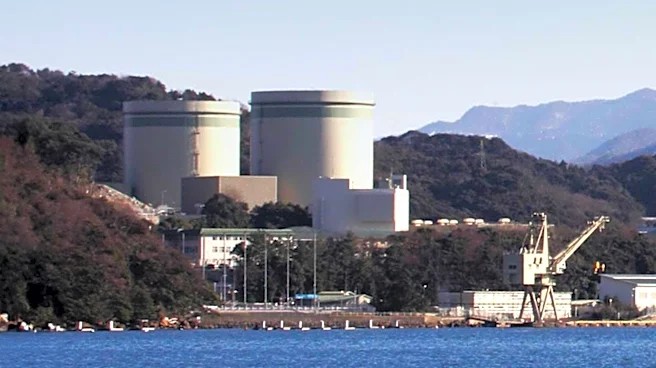
China's Tianwan nuclear power plant in Jiangsu Province has successfully completed cold functional testing for its Unit 8 reactor. This marks the completion of heavy mechanical construction and the beginning of systems testing. The cold functional test is a critical
step in evaluating the reactor's structural integrity, involving the filling of the primary cooling loop with ultra-pure demineralized water and testing the system under high pressure. The reactor, along with Unit 7, utilizes Russian-designed VVER-1200 third-generation pressurized water reactors and is expected to generate 18.8 billion kilowatt-hours of electricity annually once fully operational.
Why It's Important?
The successful testing of Unit 8 is a significant milestone in China's nuclear energy expansion, contributing to the country's goals of energy security and carbon emission reduction. The development of advanced nuclear reactors like the VVER-1200 supports China's strategy to diversify its energy sources and reduce reliance on fossil fuels. This progress is crucial for meeting China's long-term climate commitments, including achieving peak carbon emissions by 2030 and net-zero emissions by 2060. The project also highlights China's growing influence in the global nuclear energy sector.
What's Next?
Following the cold testing, Unit 8 will undergo containment pressure tests and hot functional tests before nuclear fuel is loaded. These steps are essential to ensure the reactor's safety and readiness for operation. Once operational, the reactor will be synchronized with the East China Power Grid, providing a steady supply of electricity to support industrial and residential needs. The continued development of nuclear infrastructure in China is expected to play a key role in the country's energy transition and economic growth.