




What's Happening?
The Navajo Nation has officially established a State of Emergency Response Fund with an initial allocation of $20 million. Navajo Nation President Buu Nygren signed the resolution on November 4, joined by Navajo Division for Children and Family Services
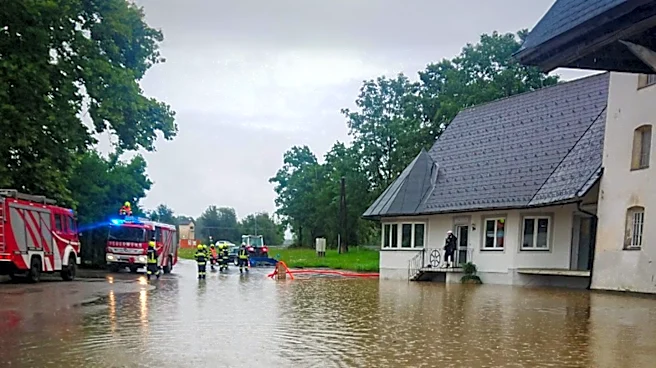
Executive Director Thomas Cody. The signing ceremony took place in Rock Point, Arizona, an area significantly impacted by recent flooding. This new fund is designed to provide immediate financial resources when a State of Emergency is declared, bypassing the often lengthy appropriation approval process. Divisions within the Navajo Nation responsible for emergency response can now request funding directly from this pool, with approvals granted by resolution of the Commission on Emergency Management. President Nygren emphasized the urgency, noting that many families remain without electricity or water and are displaced, highlighting the need for swift assistance.
Why It's Important?
The creation of the Navajo Nation's $20 million emergency response fund marks a critical step towards enhancing disaster preparedness and response capabilities for the tribal nation. Historically, communities, especially those in remote or underserved areas, often face significant delays in receiving aid due to bureaucratic processes. This dedicated fund aims to circumvent such delays, allowing for immediate deployment of resources to families affected by natural disasters like the recent flooding. This proactive measure will significantly reduce the time between a disaster event and the provision of essential services, such as temporary housing, food, water, and utility restoration. It empowers the Navajo Nation to act autonomously and swiftly in crises, directly impacting the well-being and recovery of its citizens and strengthening its resilience against future emergencies.
What's Next?
With the fund now established, the Navajo Nation is poised to respond more rapidly to future emergencies. Divisions with emergency response duties will be able to submit requests for funding to the Commission on Emergency Management as soon as a State of Emergency is declared. This will streamline the process of getting aid to affected communities. Furthermore, the Navajo Department of Emergency Management will continue to educate community and chapter officials on necessary documentation, such as the ICS Form 213, which is crucial for requesting assistance. The immediate focus will likely be on addressing the ongoing needs of families still recovering from recent floods, utilizing the new fund to expedite their recovery efforts. This initiative sets a precedent for efficient disaster management within the Navajo Nation.
Beyond the Headlines
This initiative by the Navajo Nation highlights a broader trend among tribal governments to assert greater self-determination in managing crises and providing for their citizens. By establishing an independent emergency fund, the Navajo Nation is reducing its reliance on external aid mechanisms that can often be slow or insufficient. This move not only enhances practical response capabilities but also reinforces tribal sovereignty and governance. It could serve as a model for other tribal nations seeking to improve their disaster resilience and self-sufficiency. The fund also underscores the disproportionate impact of climate-related events on Indigenous communities and the necessity for tailored, community-led solutions to address these challenges effectively.