
What's Happening?
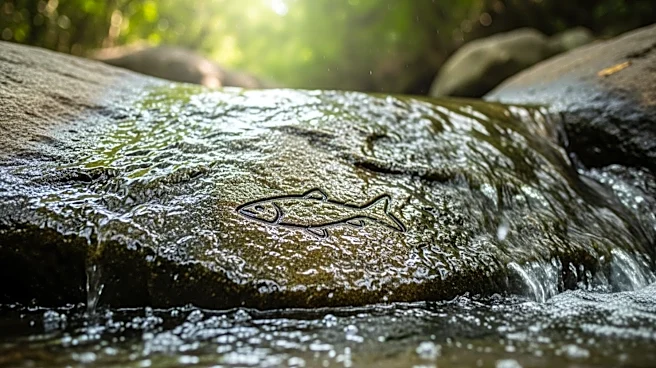
Researchers have documented a unique phenomenon involving the shellear fish (Parakneria thysi) in the Democratic Republic of Congo. These fish are capable of climbing a 50-foot waterfall at Luvilombo Falls,
using specialized anatomical features such as rear pelvic fins and pectoral fins with tiny hooks. The fish's climbing behavior, which involves vertical swimming and resting periods, is believed to be part of a migration process. This discovery, published in Scientific Reports, marks the first formal documentation of such behavior in Africa. The research was led by Pacifique Kiwele Mutambala and Emmanuel Vreven, who emphasize the importance of this behavior for the species' survival and biodiversity conservation.
Why It's Important?
The shellear fish's ability to climb waterfalls is significant for understanding biodiversity and conservation in the region. The behavior suggests a migratory pattern that could be crucial for the species' survival, as it may provide access to better resources or safer habitats. Disruptions to this migration, such as water diversion for dams or irrigation, could threaten the fish population. The study underscores the need to protect aquatic habitats and maintain ecological connectivity, which is vital for migratory species. This research also contributes to the broader understanding of fish migration and adaptation, highlighting the ecological importance of preserving natural water systems.
What's Next?
Further research is needed to fully understand the reasons behind the shellear fish's waterfall climbing and its ecological implications. Scientists may explore whether the behavior is driven by factors such as food availability or predator avoidance. Conservation efforts could focus on protecting the fish's habitat and ensuring the continuity of their migratory routes. This may involve advocating for sustainable water management practices that consider the ecological needs of migratory species. The findings could also inform conservation strategies for other migratory fish species facing similar challenges due to habitat fragmentation and environmental changes.