



What's Happening?
West Virginia officials have announced plans to drain the 60-year-old Turkey Run Lake near Ravenswood, remove its aging dam, and restore the area to a natural stream and wetland complex. This decision follows over two years of debate regarding the lake's
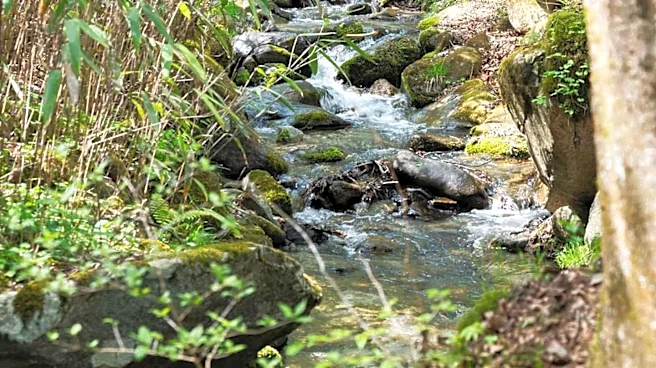
future, including an earlier attempt to halt the project by then-Governor Jim Justice due to local concerns. The West Virginia Division of Natural Resources (DNR) and the West Virginia Department of Environmental Protection (DEP) stated that the dam no longer complies with the West Virginia Dam Control and Safety Act and is considered potentially unsafe during high-precipitation events. Maintaining the existing lake would have required an estimated $30 million reconstruction project. Instead, the state opted for dam removal and stream reestablishment, a project funded by West Virginia’s In Lieu Fee Program. Dewatering of the 15-acre lake is expected to begin later this summer, with the larger restoration project slated for completion by the end of 2027. The project also includes the creation of a smaller fishing pond and wildlife-viewing trails.
Why It's Important?
This decision marks a significant shift in environmental management and recreational land use in West Virginia. The removal of Turkey Run Lake, a long-standing fishing destination, will fundamentally alter a recreational area familiar to generations of residents and anglers. While local residents and Ravenswood Mayor Josh Miller had expressed strong preferences for retaining the lake due to its importance for recreational tourism and fishing, the state prioritized dam safety and ecological restoration. The project highlights the increasing focus on restoring natural habitats and ensuring infrastructure safety, even when it conflicts with established community amenities. The use of the In Lieu Fee Program for funding demonstrates a mechanism for mitigating environmental impacts elsewhere by investing in restoration projects like this one, setting a precedent for similar initiatives across the state. The long-term ecological benefits, such as improved water quality and enhanced wildlife habitat, are being weighed against the immediate loss of a popular fishing lake.
What's Next?
Crews are scheduled to begin dewatering the 15-acre Turkey Run Lake later this summer. The broader restoration project, which involves removing the dam and reestablishing the natural stream and wetland complex, is expected to be completed by the end of 2027. The DNR and DEP will work with local partners to identify additional improvements for public access and community use, and updates will be issued as construction progresses. The state has not yet specified how fish remaining in the lake will be handled during dewatering, nor has it detailed the size or location of the planned smaller fishing pond or the species that will be managed there. The transformation will result in a landscape significantly different from what residents have known since the 1960s, with a free-flowing Turkey Run surrounded by associated wetlands and new trails for wildlife viewing. The project's success will likely influence future decisions regarding aging infrastructure and environmental restoration efforts in West Virginia.
Beyond the Headlines
The decision to drain Turkey Run Lake and restore its natural stream highlights a broader tension between historical recreational uses and contemporary environmental and safety concerns. The lake, created by a dam in 1964, has been a part of the community's identity for decades, attracting anglers from across the region. Its removal, despite local opposition, underscores a growing emphasis on ecological integrity and dam safety regulations. This case also brings to light the long-standing water quality issues of Turkey Run Lake, including impairment from nutrients, siltation, aluminum, and iron, as well as the presence of invasive aquatic vegetation like hydrilla. While these environmental problems were not cited as primary reasons for the dam's removal, the restoration project offers an opportunity to address these underlying ecological challenges. The funding mechanism, West Virginia’s In Lieu Fee Program, illustrates a market-based approach to environmental mitigation, where fees from projects impacting aquatic resources are reinvested into restoration efforts, potentially shaping future conservation strategies.