
What's Happening?
Three logging companies in Oregon have been awarded the 'Operator of the Year' title for their respective regions. This recognition highlights their commitment to protecting natural resources and actively
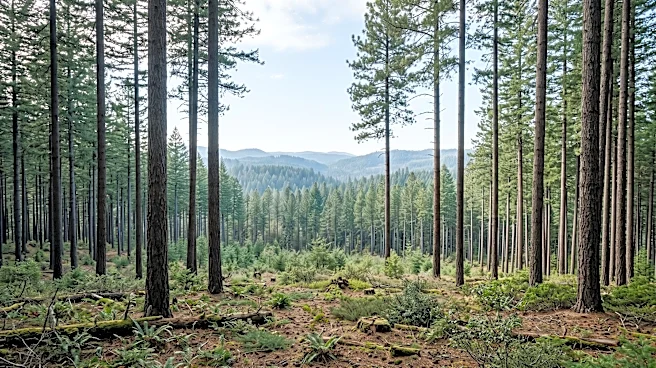
improving forest health. The awards acknowledge practices that go beyond standard operational requirements, focusing on sustainable forestry and environmental preservation within their logging activities. This initiative underscores a growing emphasis on responsible resource management within the U.S. forestry sector, particularly in states like Oregon where timber production is a significant industry. The selection process likely involved evaluating their operational methods, adherence to environmental regulations, and proactive measures taken to enhance forest ecosystems. This recognition serves as a benchmark for other companies in the industry, promoting best practices in logging and forest management.
Why It's Important?
The recognition of these Oregon logging companies is important as it sets a precedent for sustainable practices within the U.S. forestry industry. By highlighting operators who prioritize environmental protection and forest health, it encourages other companies to adopt similar responsible methods. This is crucial for the long-term viability of the timber industry and the ecological well-being of U.S. forests. Sustainable logging practices help mitigate issues such as soil erosion, water quality degradation, and habitat loss, which are critical concerns for environmental groups and the public. Furthermore, promoting forest health can reduce the risk of severe wildfires, a significant issue in the Western U.S. This initiative also demonstrates that economic activity and environmental stewardship can coexist, potentially influencing policy decisions and consumer preferences towards sustainably sourced timber products. It can also lead to increased investment in eco-friendly logging technologies and training.
What's Next?
The recognition of these logging companies is likely to inspire broader adoption of sustainable practices across the U.S. forestry sector. Other companies may seek to emulate the award-winning operators to gain similar recognition, improve their public image, and potentially access new markets that prioritize environmentally responsible sourcing. Industry associations and regulatory bodies might use these examples to develop new guidelines or best practice manuals for logging operations. There could also be increased collaboration between environmental organizations and the timber industry to further refine and implement sustainable forest management strategies. Additionally, consumers and businesses that purchase timber products may become more discerning, favoring suppliers with proven records of environmental stewardship, which could drive market demand for sustainably harvested wood.
Beyond the Headlines
Beyond the immediate recognition, this development reflects a broader societal shift towards valuing environmental sustainability in industrial practices. It challenges the traditional perception of logging as solely extractive, highlighting its potential role in active forest management and ecological restoration. This shift has ethical implications, as it encourages businesses to consider their impact on future generations and the natural world. Legally, it could lead to more stringent environmental regulations or incentives for companies that adopt sustainable practices. Culturally, it contributes to a narrative where industries are increasingly expected to be stewards of the environment, not just exploiters of resources. This could foster greater public trust in the forestry sector and encourage more nuanced discussions about resource management and conservation.