


What's Happening?
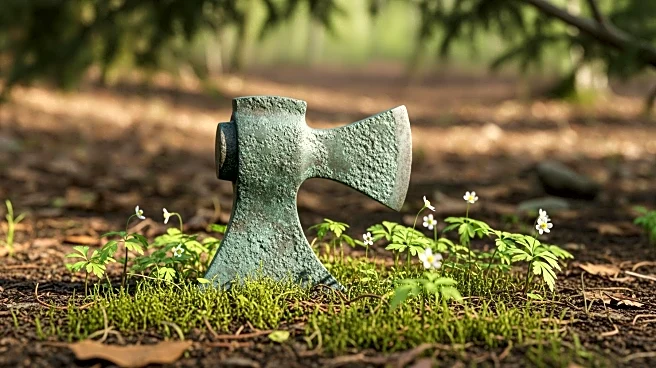
The Weller family, while metal detecting near Lewes, East Sussex, discovered a collection of copper ingots dating back to the Bronze Age, approximately 1100 to 800 BC. Simon Weller, along with his father Chris and daughter Amelia, unearthed these ancient
artifacts, initially mistaking them for muddy lumps of metal. Upon consulting a friend, they realized the significance of their find. The ingots, considered 'treasure', were donated to the Barbican House Museum in Lewes, where they will be displayed in the spring. Emma O'Connor from The Sussex Archaeological Society highlighted the importance of this addition to the museum's collection, enhancing understanding of ancient metalworking skills.
Why It's Important?
This discovery is significant as it provides insights into the metalworking skills and cultural practices of ancient societies in the region. The ingots, which could have been used for making tools, weapons, or religious offerings, offer a glimpse into the economic and social activities of the time. The donation to the museum ensures that these artifacts will be preserved and studied, contributing to the historical narrative of the area. Such finds also highlight the potential for further archaeological discoveries in the region, encouraging both professional and amateur archaeologists to explore the rich history beneath the surface.
What's Next?
The ingots are set to be displayed at the Barbican House Museum in Lewes later in the spring, allowing the public to view and learn from these ancient artifacts. Simon Weller expressed interest in returning to the site, suggesting the possibility of uncovering more historical items. This ongoing interest in metal detecting and archaeology could lead to further discoveries, enriching the historical understanding of the area. The museum's exhibition of the ingots will likely attract visitors and scholars, fostering a deeper appreciation for the region's ancient history.