



What's Happening?
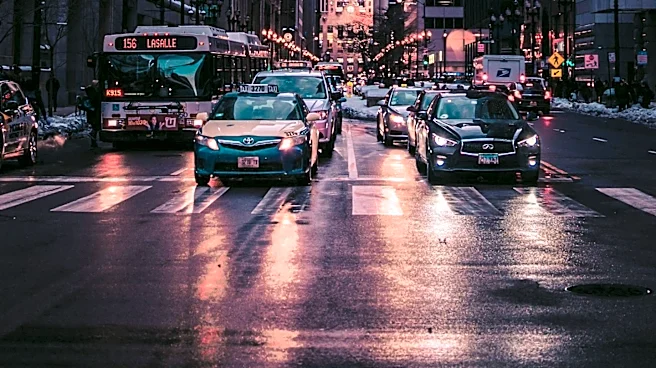
Chicago's Department of Planning Development has announced its support for five additional office-to-residential conversion projects as part of its 'LaSalle Street Reimagined' initiative. This program aims to transform vacant downtown office spaces into
1,765 mixed-income residential units. The city recently celebrated the completion of its first such conversion in the Loop, a 14-story building now known as the Bellwether, which offers 117 mixed-income units. Developer R2 utilized $28 million in tax increment financing from the city and $7.8 million in federal historic tax credits for this project, with 41 units designated for households earning 60% of the area median income. The initiative seeks to address both the shortage of affordable housing and the high office vacancy rates in the Loop, which have been exacerbated by post-pandemic work trends. Beyond these city-backed projects, nearly two dozen private office conversions are also in the pipeline, projected to add close to 4,000 residential units. According to RentCafe, Chicago ranks third nationally for office-to-residential conversions, following New York and Washington.
Why It's Important?
This initiative is crucial for Chicago as it tackles two significant urban challenges simultaneously: a pressing affordable housing shortage and record-high office vacancies in its central business district. By converting underutilized commercial spaces into residential units, the city is not only increasing its housing stock, particularly mixed-income options, but also revitalizing its downtown area. The shift from a single-use office district to a more diverse community with a mix of residents, workers, and visitors is expected to foster a more vibrant and resilient urban core. This approach could serve as a model for other major U.S. cities grappling with similar issues, demonstrating how strategic public-private partnerships and financial incentives can drive urban regeneration. The success of these conversions could lead to increased foot traffic, support for local businesses, and a more dynamic urban environment, ultimately enhancing the city's economic and social fabric.
What's Next?
The five newly backed office-to-residential conversions are expected to proceed, contributing significantly to Chicago's housing supply and downtown revitalization efforts. City officials will likely continue to monitor the progress of these projects and evaluate the overall impact of the LaSalle Street Reimagined initiative. The ongoing pipeline of private office conversions suggests a sustained trend in repurposing commercial real estate, which could further transform the urban landscape. Other cities may observe Chicago's model to inform their own strategies for adaptive reuse and urban development. The long-term success of these conversions will depend on factors such as continued financial viability, market demand for downtown living, and the effective integration of new residential communities into existing urban infrastructure. Future policy decisions might focus on refining incentive programs and addressing any emerging challenges related to mixed-use developments.
Beyond the Headlines
The trend of converting empty office spaces into residential units, exemplified by Chicago's initiative, highlights a broader societal and economic shift in how urban centers are utilized. The post-pandemic era has fundamentally altered traditional work patterns, leading to a surplus of office space and a renewed focus on urban residential living. This adaptive reuse not only addresses housing scarcity but also promotes environmental sustainability by repurposing existing structures rather than engaging in new construction. It also raises questions about the future identity of downtown areas, moving away from purely commercial hubs to more integrated, live-work-play environments. The ethical implications include ensuring equitable access to these new housing opportunities and preventing gentrification, while the legal and cultural dimensions involve navigating complex zoning laws, historical preservation, and community integration. This transformation could redefine urban planning and development for decades to come.