
What's Happening?
A recent study published in Climatic Change highlights a significant threat to global wheat production due to climate change. The research, led by Dr. Nimai Senapati and colleagues at Rothamsted Research, indicates that extreme heat during the critical
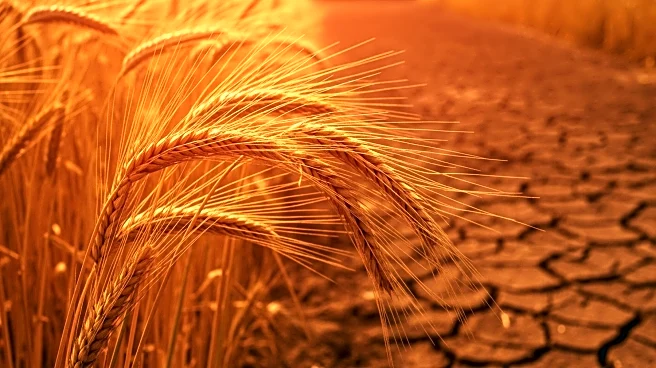
flowering period of wheat could severely impact harvests by 2090. Historically, drought has been the primary concern for wheat yields, but the study reveals that heat stress is becoming a more pressing issue. The research analyzed 53 sites across 33 countries, representing 91% of global wheat production, using climate projections from 15 global climate models. The findings suggest that while drought stress may decrease slightly due to earlier flowering, heat stress is expected to rise sharply, posing a significant threat to major wheat-producing regions.
Why It's Important?
The implications of this study are profound for global food security, as wheat is a staple crop feeding billions worldwide. The projected increase in heat stress could lead to substantial yield losses, particularly in key wheat-producing countries like China, the United States, and Russia. This shift in climate threats necessitates a reevaluation of current agricultural practices and breeding programs, which have traditionally focused on drought tolerance. The study underscores the urgency for developing heat-tolerant wheat varieties and implementing adaptive management practices to mitigate the impact of climate change on wheat production. Failure to address these challenges could result in food price spikes, export restrictions, and increased food insecurity globally.
What's Next?
The study calls for immediate action in wheat breeding programs to incorporate heat tolerance traits, as current breeding cycles take 10 to 15 years from conception to variety release. Additionally, a portfolio approach combining genetic improvements, better management practices, and supportive policy frameworks is recommended. Early sowing, improved soil management, and social safety nets are among the strategies suggested to help farmers adapt to changing climate conditions. The research also highlights the importance of considering climate projection uncertainties in adaptation planning, emphasizing the need for proactive measures to ensure global wheat yield stability under future climate stress.
Beyond the Headlines
The study's findings highlight the need for a paradigm shift in agricultural research and policy. The focus must expand beyond yield potential to include yield stability under climate stress. This requires a coordinated effort from the international agricultural research community, policymakers, and farmers to develop and implement strategies that address both drought and heat stress. The study also serves as a call to action for global collaboration in addressing climate change impacts on agriculture, emphasizing the interconnected nature of global food systems and the potential for synchronous shocks to disrupt food security worldwide.