
What's Happening?
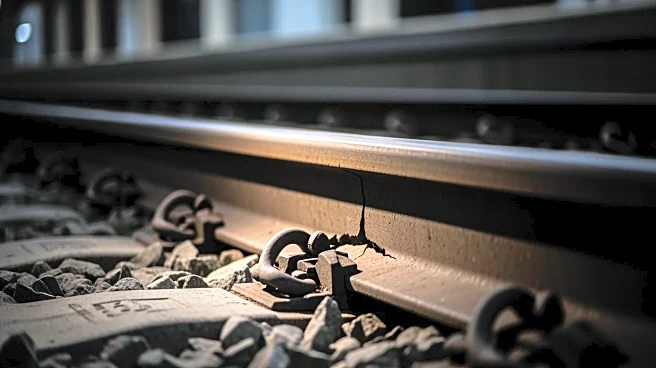
An initial report by Spain's CIAF rail investigation commission has revealed that a fracture in a straight section of track occurred before a high-speed train derailed, leading to a tragic rail disaster.
The incident, which took place last Sunday, resulted in the deaths of 45 people. The Iryo train, operated by a private company, derailed when its rear carriages crossed onto the opposite track, colliding with an oncoming train operated by the state-owned Renfe. The report highlights that notches were found on the wheels of the Iryo train's front carriages, which remained on the track, as well as on three earlier trains that had safely passed over the same section. A significant gap of nearly 40 centimeters in the track has become a focal point of the investigation. The collision occurred around 19:45 local time, shortly after the Iryo train departed from Málaga for Madrid. The derailment involved the last three carriages of the Iryo train, which collided with the Renfe train, causing most casualties in the front carriages of the state-operated train.
Why It's Important?
The findings of the CIAF report underscore critical safety concerns in rail infrastructure, highlighting the potential risks associated with track maintenance and inspection. The revelation of a pre-existing fracture raises questions about the effectiveness of current safety protocols and the need for more rigorous inspections to prevent such tragedies. This incident could prompt a reevaluation of rail safety standards not only in Spain but also in other countries with similar rail systems. The disaster has significant implications for the rail industry, potentially affecting public confidence in high-speed rail travel and prompting calls for increased investment in infrastructure safety. The tragedy also highlights the importance of timely maintenance and the potential consequences of neglecting infrastructure integrity, which could lead to policy changes and increased regulatory scrutiny.
What's Next?
In the wake of the report, there may be increased pressure on Spanish authorities to conduct a thorough investigation into the maintenance practices and safety protocols of both private and state-operated rail companies. The findings could lead to legal actions or penalties against those responsible for track maintenance. Additionally, there may be calls for a comprehensive review of rail safety standards and the implementation of more advanced technologies for track monitoring and maintenance. The incident could also influence international rail safety discussions, prompting other countries to reassess their own rail infrastructure and safety measures to prevent similar disasters.