






What's Happening?
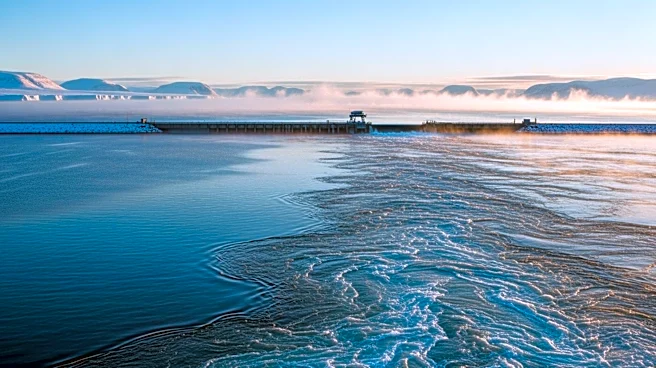
Researchers Jelle Soons and Henk Dijkstra from the University of Utrecht have proposed constructing a dam across the Bering Strait to prevent the collapse of the Atlantic Meridional Overturning Circulation (AMOC). The AMOC, a crucial ocean current system,
is slowing down due to rising global temperatures, which could lead to a collapse similar to one that occurred 12,000 years ago. This previous collapse resulted in a significant cooling of the Northern Hemisphere. The proposed dam aims to reduce freshwater flow from the Arctic into the North Atlantic, thereby strengthening the AMOC. The plan, however, is controversial and requires more data to accurately predict its impact.
Why It's Important?
The potential collapse of the AMOC could have severe consequences, including plunging Europe into extreme cold and causing droughts in the tropics. It could also lead to a rise in sea levels along the Atlantic coast. The proposed dam represents a significant geoengineering effort to mitigate these risks. However, the plan is fraught with uncertainties, including its ecological impact and the feasibility of construction. The proposal highlights the urgent need for climate intervention strategies as global warming continues to threaten critical natural systems.
What's Next?
Before any construction can begin, scientists need to gather more data to refine their models and predictions. The proposal will likely face scrutiny from environmentalists and policymakers, given its potential ecological impact. Additionally, there is a need for international cooperation, as the Bering Strait is a shared waterway between the U.S. and Russia. The debate over this proposal may also influence broader discussions on climate change mitigation strategies.
Beyond the Headlines
The proposal raises ethical questions about human intervention in natural systems. While it aims to prevent a climate disaster, the long-term ecological consequences are uncertain. This situation underscores the complexity of balancing immediate climate action with potential unintended consequences. The discussion around the dam could also influence future geoengineering projects and policies.