




What's Happening?
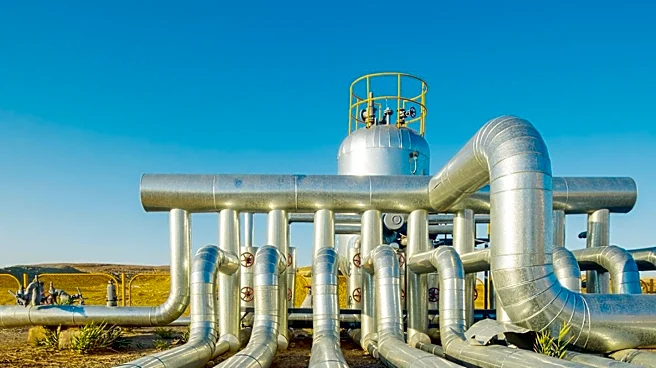
On November 9, 2026, the Supreme Court is scheduled to hear oral arguments in the case of Leonard W. Hoffmann v. WBI Energy Transmission, Inc. The central question before the Court is whether 'just compensation' in private condemnations under the Natural
Gas Act (NGA) should be determined by state law, particularly concerning the recovery of attorney fees. This case stems from a dispute between North Dakota ranchers and WBI Energy Transmission, Inc. over the compensation for a natural gas pipeline easement. After three years of litigation, the parties agreed on the easement price but not on attorney fees. The Eighth Circuit Court of Appeals denied the ranchers' request for attorney fees, asserting that the NGA does not explicitly provide for them, and thus the Fifth Amendment's standard of 'just compensation'—which typically excludes attorney fees—applies. This ruling created a circuit split, as four other federal circuits have previously allowed for the recovery of attorney fees in similar NGA condemnation cases by applying federal common law and state law considerations.
Why It's Important?
The Supreme Court's decision in Hoffmann v. WBI Energy Transmission, Inc. carries significant implications for property owners, natural gas pipeline companies, and the broader energy infrastructure sector across the U.S. If the Court upholds the Eighth Circuit's decision, property owners facing eminent domain actions by private pipeline companies may be less likely to challenge initial compensation offers, as the cost of litigation, including attorney fees, could erode any potential increase in compensation. This could lead to 'low-ball' offers from pipeline companies, making condemnations potentially less expensive and quicker for them. Conversely, if the Court reverses the Eighth Circuit, allowing for the recovery of attorney fees, it could incentivize more property owners to litigate for higher compensation, potentially increasing pipeline project costs and extending timelines. The outcome will also clarify the interplay between federal and state law in eminent domain proceedings, impacting how 'just compensation' is defined and applied nationwide.
What's Next?
The Supreme Court's ruling, expected after the November 9, 2026, oral arguments, will either affirm or reverse the Eighth Circuit's decision. Regardless of the outcome, Congressional action could follow. If the Eighth Circuit's opinion is upheld, there may be pressure on Congress to amend NGA Section 7(h) to explicitly allow for the recovery of attorney fees and costs, thereby protecting landowner property rights. Historically, Congress has responded to unpopular Supreme Court opinions by amending the NGA, as seen in 1954. If the Eighth Circuit's decision is reversed, it could lead to a 'geographical crazy quilt' of federal common law, where attorney fee recovery in NGA condemnations varies based on state law. This inconsistency could prompt calls for a clear, uniform federal rule to ensure equitable compensation across different states for similar pipeline projects.
Beyond the Headlines
This case delves into fundamental legal and ethical considerations surrounding property rights and the balance of power between private entities with delegated eminent domain authority and individual landowners. The ranchers' argument emphasizes that private, for-profit companies exercising eminent domain should not be treated identically to the federal government, which is accountable to the public. They contend that the Fifth Amendment's 'just compensation' should serve as a floor, not a ceiling, especially when property owners lack the economic means to contest low offers. The case also highlights the tension between 'strict construction' of statutory text, which aligns with WBI's argument that the NGA's silence on attorney fees was intentional, and a long-standing judicial commitment to protecting property rights, as evidenced by past Supreme Court rulings that have favored landowners in compensation disputes. The decision could influence future infrastructure development projects by altering the financial landscape of land acquisition.