



What's Happening?
The Centers for Disease Control and Prevention (CDC) has issued a Level 1 global travel health warning, highlighting an increased risk of dengue fever across 16 countries. This advisory comes in response to a rise in dengue activity worldwide and a higher-than-expected
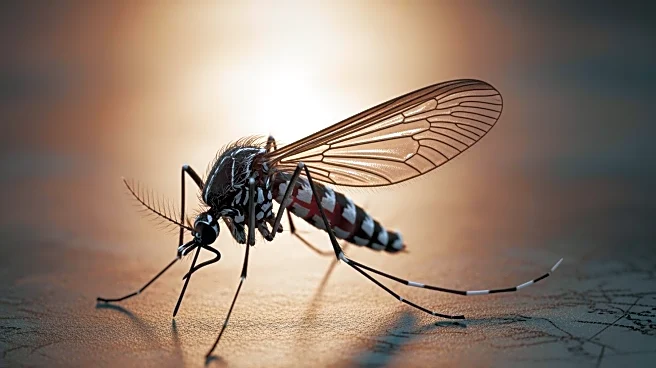
number of U.S. travelers returning with infections. The affected countries include Afghanistan, Bangladesh, Bolivia, Colombia, Cook Islands, Cuba, Guyana, Maldives, Mali, Mauritania, New Caledonia, Pakistan, Samoa, Sudan, Timor-Leste, and Vietnam. Dengue fever, transmitted by Aedes mosquitoes, can lead to severe health complications such as internal bleeding, organ failure, and death. The CDC advises travelers to take mosquito-bite prevention seriously, recommending the use of insect repellent, wearing long-sleeved clothing, and staying in accommodations with air conditioning or window screens.
Why It's Important?
The CDC's travel warning underscores the growing global concern over dengue fever, a disease that poses significant health risks. With international travel increasing, particularly during spring break and summer vacations, the potential for dengue to spread among travelers is heightened. This advisory is crucial for public health as it aims to prevent the spread of dengue fever both internationally and within the U.S. by encouraging travelers to adopt preventive measures. The warning also highlights the need for increased awareness and preparedness among travelers, healthcare providers, and public health officials to manage and mitigate the risks associated with dengue fever.
What's Next?
Travelers are advised to continue practicing mosquito-bite prevention even after returning home to prevent potential local transmission. The CDC will likely continue monitoring dengue activity and may update travel advisories as necessary. Public health campaigns may be intensified to educate travelers about the risks and preventive measures associated with dengue fever. Additionally, research into more effective treatments and vaccines for dengue may gain momentum as the disease continues to pose a global health challenge.