




What's Happening?
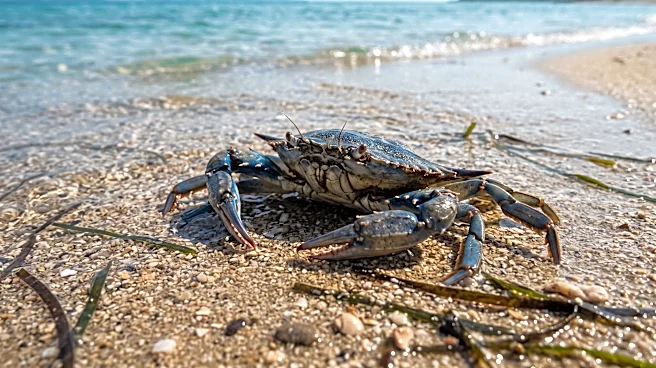
Friend of the Sea, in collaboration with the World Sustainability Foundation (WSF), has initiated a program to support Italian fishing and aquaculture businesses affected by the invasive blue crab. The 'Blue Crab and Responsible Fishing' initiative invites
proposals from seafood businesses, researchers, and other stakeholders to address the environmental and economic impacts of the species' expansion along Italy's Adriatic coast. Governmental figures from August indicate that the blue crab has caused over 70 percent declines in market-sized clam production in some areas of Emilia-Romagna. While commercial utilization of blue crab is being explored as a solution, Friend of the Sea and WSF emphasize that any commercial exploitation must align with the primary goal of containment. Projects receiving support must demonstrate business models compatible with declining blue crab abundance, avoiding practices that would maintain or increase wild populations.
Why It's Important?
The invasive blue crab crisis poses a significant threat to Italy's marine biodiversity and its vital shellfish industry, impacting local economies and livelihoods. The substantial decline in clam production directly affects fishing communities and businesses, leading to economic hardship. For the U.S. and global seafood markets, such ecological disruptions can lead to shifts in supply chains and increased prices for certain seafood products. The initiative's focus on sustainable commercial utilization, while prioritizing containment, offers a potential model for managing invasive species globally. It highlights the delicate balance between economic relief for affected communities and the overarching environmental goal of ecosystem protection. The success of this program could provide valuable lessons for other regions facing similar ecological challenges, including those in the U.S. where invasive species are a growing concern.
What's Next?
The initiative aims to complete initial project selection by December 31, with implementation expected to begin in February 2027, contingent on funding and necessary authorizations. The first-phase fundraising target is EUR 50,000 (USD 55,967) to support up to three projects. Support may include direct financial contributions, assistance in securing external funding, and access to technical specialists. Projects will be required to demonstrate business models that are compatible with declining blue crab populations, with safeguards against practices that would encourage the species' proliferation. Friend of the Sea will also assess certification pathways for eligible fishing, processing, and distribution activities involving blue crab, subject to compliance with standards and independent audits. A proportionate monitoring framework will be established for each project to track its effectiveness in reducing crab pressure and improving business positions.
Beyond the Headlines
The blue crab crisis in Italy underscores the broader global challenge of invasive species, often exacerbated by climate change and increased international trade. The dilemma of whether to commercialize an invasive species for economic benefit while simultaneously aiming for its eradication or containment is a complex one. This initiative attempts to navigate this by setting strict conditions that prioritize ecological goals. The concept of 'responsible fishing' in this context takes on a new meaning, focusing not just on sustainable harvesting but on active ecosystem management to mitigate the impact of non-native species. The long-term implications include the potential for new seafood markets and products derived from invasive species, but also the risk of inadvertently creating an economic incentive for their continued presence if not managed carefully. This case study could inform future policies on invasive species management worldwide, including in U.S. coastal regions facing similar ecological threats.