



What's Happening?
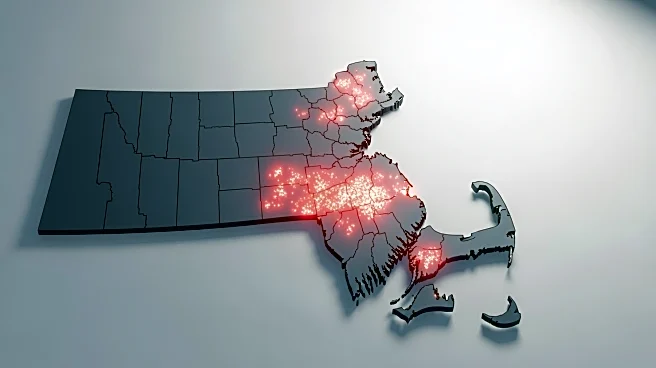
Researchers from Boston Children's Hospital have identified areas in Massachusetts that are vulnerable to measles outbreaks due to lower vaccination rates. Despite the state's overall high vaccination coverage, certain ZIP codes, such as Middlefield's
01243 and Conway's 01341, show significant risk. The study, published in Nature Health, utilized data from an online platform where parents reported their children's vaccination status. This research highlights the impact of vaccine hesitancy, which has been exacerbated by skepticism surrounding COVID-19 vaccines. The findings are crucial as the U.S. faces a resurgence of measles, threatening its elimination status.
Why It's Important?
The identification of at-risk areas for measles outbreaks is critical for public health planning and intervention. Measles is highly contagious, requiring a 93-95% vaccination rate to maintain herd immunity. The resurgence of measles in the U.S. could lead to the loss of its elimination status, which would reflect poorly on the nation's public health infrastructure. This situation underscores the importance of maintaining high vaccination rates to protect vulnerable populations, such as infants and immunocompromised individuals, and prevent potential outbreaks.
What's Next?
To prevent future outbreaks, rapid case identification, contact tracing, and public education are essential. The American Academy of Pediatrics recommends timely administration of the MMR vaccine to children. A panel of international experts will review the U.S.'s measles elimination status later this year. Massachusetts' strong public health infrastructure remains a safeguard, but continuous efforts are needed to address pockets of low vaccination and ensure community protection.