
What's Happening?
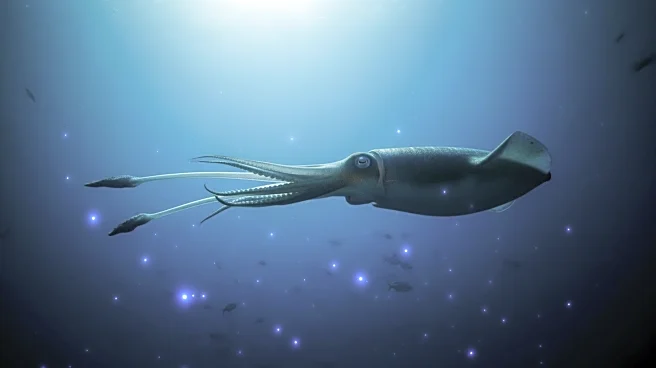
Dr. Michelle Taylor, a researcher from the University of Essex, led a groundbreaking expedition as part of the Ocean Census project, which resulted in the capture of rare footage of a colossal squid. The
expedition, which took place in the South Atlantic Ocean near the South Sandwich Islands, was conducted using the R/V Falkor. The team, initially unaware of the significance of their find, captured the first-ever video footage of a colossal squid, a creature that has not been seen for over a century. The discovery was made during a 35-day mission aimed at exploring deep-sea ecosystems. The footage was shared widely on social media, drawing significant attention to the expedition's findings. The colossal squid, a juvenile measuring 30cm, was spotted at a depth of 600 meters. This discovery is part of a larger collection of nearly 2,000 specimens gathered by the team, highlighting the rich biodiversity of relatively untouched marine environments.
Why It's Important?
The capture of the colossal squid on video is a significant scientific achievement, as it provides rare insights into a species that has long been shrouded in mystery. This discovery not only enhances our understanding of deep-sea biodiversity but also underscores the importance of exploring and preserving these remote ecosystems. The expedition's findings could have implications for marine biology, conservation efforts, and our understanding of the impacts of climate change on oceanic environments. The attention garnered by the footage may inspire further research and funding for deep-sea exploration, potentially leading to more discoveries and a greater appreciation for the ocean's unexplored regions.
What's Next?
Following the success of this expedition, there may be increased interest and investment in deep-sea research. The Ocean Census project could inspire similar initiatives aimed at uncovering the mysteries of the ocean's depths. Researchers may also focus on studying the collected specimens to gain further insights into the adaptations and behaviors of deep-sea creatures. Additionally, the public interest generated by the expedition could lead to greater awareness and advocacy for marine conservation, potentially influencing policy decisions related to ocean protection and climate change mitigation.
Beyond the Headlines
The discovery of the colossal squid and other unique species during the expedition highlights the ethical and environmental considerations of deep-sea exploration. As human activities increasingly impact marine environments, the need for sustainable exploration practices becomes more pressing. The expedition's findings serve as a reminder of the delicate balance between scientific discovery and environmental stewardship. Furthermore, the use of technology, such as remotely operated vehicles and live-streaming capabilities, demonstrates the potential for innovative approaches to scientific research and public engagement.