






What's Happening?
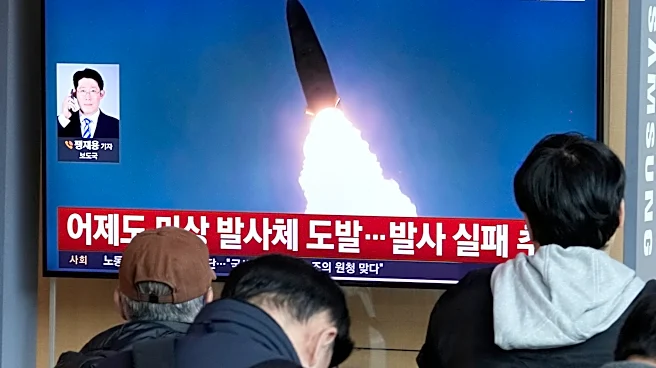
North Korea has conducted a series of missile tests, including the launch of ballistic missiles equipped with cluster-bomb warheads. These tests, reported by North Korean state media, were part of a broader demonstration of new weapons systems, including anti-aircraft
and electromagnetic weapons. The missiles were launched from North Korea's eastern coastal area and flew distances ranging from 240 to 700 kilometers before landing in the sea. South Korea's military confirmed the launches, which occurred over a three-day period. The tests have heightened tensions in the region, with North Korea aiming to expand its nuclear-capable forces against South Korea. The U.S. military stated that these launches pose no immediate threat to the United States or its allies.
Why It's Important?
The missile tests underscore North Korea's ongoing efforts to enhance its military capabilities, particularly its nuclear arsenal. This development is significant as it challenges regional security and stability, particularly for South Korea and Japan. The tests also reflect North Korea's strategic intent to strengthen its position amid stalled diplomatic efforts with the United States and South Korea. The use of cluster-bomb warheads, which are designed to evade missile defense systems, indicates a potential escalation in North Korea's military strategy. This situation could lead to increased military readiness and diplomatic tensions in the region.
What's Next?
The international community, particularly the United States, South Korea, and Japan, will likely monitor North Korea's military activities closely. Diplomatic efforts may be renewed to address the security concerns raised by these tests. Additionally, there may be calls for increased sanctions or other measures to deter further military provocations by North Korea. The situation could also prompt discussions on regional defense strategies and the deployment of additional missile defense systems.