


What's Happening?
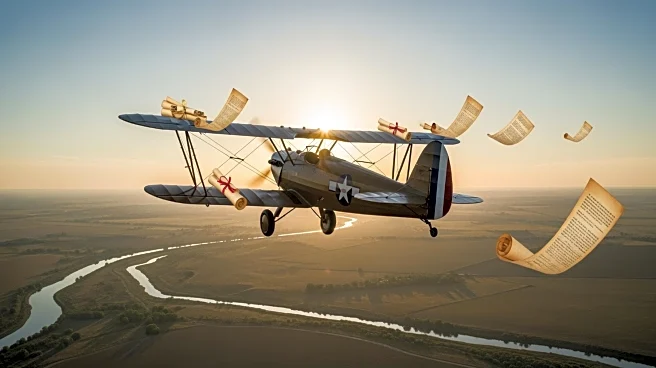
For the first time in U.S. history, several of the nation's founding documents are being transported across the country on a dedicated jet, known as the Freedom Plane. This initiative, organized by the National Archives in partnership with Boeing, aims
to bring these historical artifacts closer to the American public. The tour commenced from Ronald Reagan Washington National Airport and will visit eight cities, including Kansas City, Atlanta, Los Angeles, and Houston, among others, through August. The documents on board include an original engraving of the Declaration of Independence, the Oaths of Allegiance of George Washington, Alexander Hamilton, and Aaron Burr, and the Treaty of Paris, which concluded the American Revolution. The Freedom Plane, a Boeing 737-7BC, is a modern tribute to the 1976 Freedom Train that toured the country for the bicentennial.
Why It's Important?
This tour represents a significant effort to make American history more accessible to the public, especially for those unable to visit the National Archives in Washington, D.C. By bringing these foundational documents to various cities, the initiative fosters a deeper connection between citizens and their national heritage. It also underscores the importance of preserving and celebrating the nation's history, particularly at a time when historical literacy is crucial for understanding contemporary issues. The tour is expected to enhance public engagement with American history and inspire a sense of national pride and unity.
What's Next?
As the tour progresses, each city will host the documents for a limited time, allowing local communities to engage with these historical artifacts. The National Archives and Boeing have emphasized the security and preservation of the documents throughout the tour. Future stops include major cultural and historical institutions in each city, providing educational opportunities and events to complement the exhibition. The tour is likely to attract significant public interest and media coverage, potentially influencing future initiatives to make historical documents more accessible nationwide.