







What's Happening?
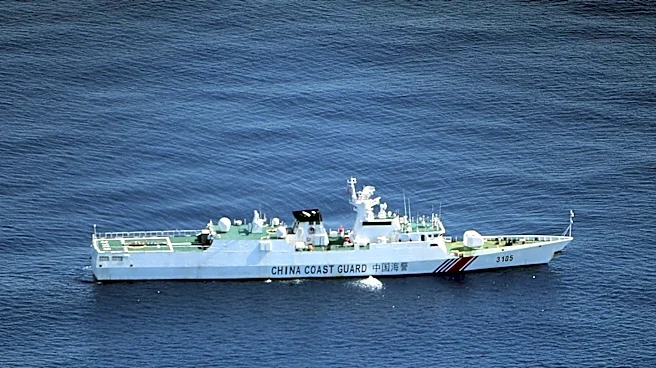
China has deployed a significant naval presence, including over 50 warships and official vessels, along the island arc stretching from southern Japan to the Philippines. Joseph Wu, secretary-general of Taiwan's National Security Council, highlighted this
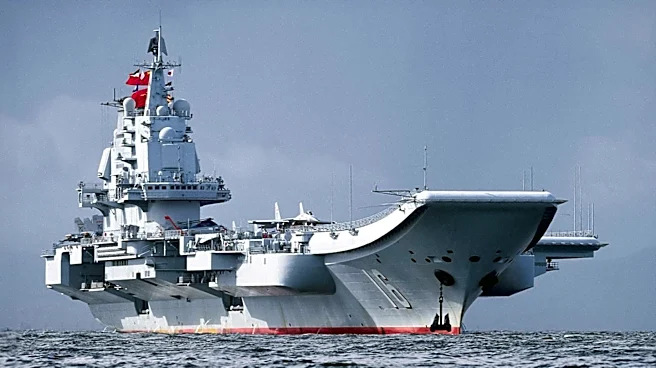
deployment on October 28, noting 53 Chinese ships, with 34 being navy warships, including the aircraft carrier Liaoning and its battle group. These formations were observed east of the Philippines, off Taiwan's east and southeast coasts, and near southern Japan. Taiwan is increasingly publicizing the positions of Chinese naval and coast guard ships to draw international attention to what it perceives as a simultaneous threat to Taiwan, Japan, and the Philippines. This comes as the U.S. Army Pacific is preparing for a potential conflict by 2027, a timeline General Ronald Clark stated remains 'valid.'
Why It's Important?
This large-scale Chinese naval deployment signifies a substantial escalation of military posturing in the Indo-Pacific region, directly impacting the security of Taiwan, Japan, and the Philippines. Taiwan views this as an attempt to project deterrence and undermine regional peace, framing Beijing's pressure as a problem for the entire First Island Chain. The U.S. military's preparation for a potential conflict by 2027 underscores the seriousness with which these developments are being viewed, indicating a strategic shift towards readiness for a high-intensity scenario. The increased naval traffic and the explicit threat perception from Taiwan's security officials highlight the growing instability and the potential for miscalculation in one of the world's most critical geopolitical flashpoints. This situation also puts pressure on regional alliances and defense cooperation efforts.
What's Next?
The immediate next step involves continued vigilance from Taiwan, Japan, and the Philippines regarding Chinese naval movements. Taiwan's Defence Minister Wellington Koo expressed concern over any attempts to project deterrence, while a senior security official indicated that the Liaoning carrier's heading after its drills would signal stronger intent, particularly towards Japan. The U.S. is actively seeking to enhance defense cooperation with ASEAN nations, with Defence Secretary Pete Hegseth proposing a US-ASEAN framework for defense cooperation focusing on maritime domain awareness and interoperability. This suggests increased joint exercises and intelligence sharing in the region. However, China's defense ministry has dismissed the carrier's deployment as routine training, indicating no immediate change in its assertive stance.
Beyond the Headlines
The coordinated deployment of such a large Chinese naval force across multiple strategic locations suggests a sophisticated and deliberate strategy to project power and test regional responses. By simultaneously threatening Taiwan, Japan, and the Philippines, China aims to demonstrate its capacity for multi-front operations and potentially overwhelm regional defenses. This move also serves as a psychological operation, aiming to sow discord among allies and test their resolve. The U.S. focus on a 2027 timeline, while not universally agreed upon by intelligence agencies, creates a sense of urgency for military preparedness and alliance strengthening. This situation could accelerate the militarization of the Indo-Pacific, leading to a more precarious security environment and increased defense spending across the region.