


What's Happening?
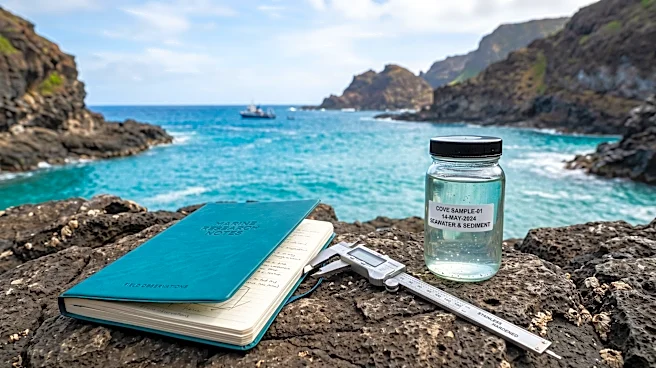
Chaminade University of Honolulu is launching a new Bachelor of Arts in Marine & Oceanic Sustainability program, with applications opening in Fall 2027. This interdisciplinary degree is unique in Hawai’i, combining natural sciences like biology and oceanography
with humanities disciplines such as psychology, law, and art. The program aims to prepare students for careers in marine-oriented fields, addressing the growing demand in the 'blue economy.' According to College of Arts & Sciences co-Dean Gail Grabowsky, Ph.D., jobs in the blue economy are expanding more rapidly than in other major sectors, as reported by the United Nations and the National Oceanic and Atmospheric Administration. Justin Wyble, Ph.D., Assistant Professor of English at Chaminade University, highlighted the program's interdisciplinary nature, emphasizing its blend of scientific rigor and thoughtful inquiry through humanities traditions. The curriculum is designed to provide students with a deep understanding and appreciation of Hawai’i and Oceania, while also equipping them with practical skills for impactful marine science research and investigations.
Why It's Important?
This new degree program is significant for the U.S., particularly for the Pacific region, as it directly addresses the burgeoning 'blue economy' and the increasing need for skilled professionals in marine conservation and sustainability. By integrating both scientific and humanities perspectives, Chaminade University is fostering a holistic approach to marine issues, which is crucial for developing comprehensive solutions to complex environmental challenges. The program's focus on career readiness in fields like fisheries management, coastal restoration, ecotourism, and marine journalism will contribute to a more robust workforce capable of supporting sustainable practices and economic growth in coastal communities. Furthermore, by incorporating Polynesian and Native Hawaiian knowledge, the program promotes cultural understanding and a sense of place, which can lead to more effective and culturally sensitive conservation efforts. This initiative positions Hawai’i as a leader in marine education and research, potentially attracting students and experts from across the Pacific Rim.
What's Next?
Beginning in Fall 2027, prospective students can apply to the new Bachelor of Arts in Marine & Oceanic Sustainability program at Chaminade University. The university anticipates that the program will attract students not only from Hawai’i but also from across the Pacific Rim and Oceania, particularly those interested in contributing to their home islands' cultures, economies, and ecologies. Graduates will be qualified for a diverse range of careers, including fisheries management and science, natural resources management, coastal management and restoration, coastal recreation, ecotourism, coral reef restoration, education, advocacy and conservation, and marine and coastal journalism. The program's organizers, including Dr. Wyble, hope it will empower students to drive positive change in addressing the significant challenges facing the world's ocean environments and communities. The university plans to maintain a strong balance between science and humanities courses, ensuring a well-rounded education for its students.
Beyond the Headlines
The introduction of this Marine & Oceanic Sustainability degree reflects a broader shift in educational paradigms, recognizing the interconnectedness of scientific understanding, cultural heritage, and ethical considerations in addressing global challenges. By emphasizing the 'blue continent' perspective, as articulated by Dr. Grabowsky, the program challenges traditional views of oceans as dividers and instead highlights their role as connectors. This approach has profound implications for fostering international cooperation and understanding, particularly among Pacific Island nations that share a deep cultural and economic reliance on the ocean. The program's commitment to integrating indigenous knowledge with Western scientific methods could serve as a model for other institutions seeking to develop more inclusive and effective environmental education programs. This holistic framework could lead to innovative solutions for marine conservation that are both scientifically sound and culturally appropriate, promoting long-term sustainability and community well-being.