









What's Happening?
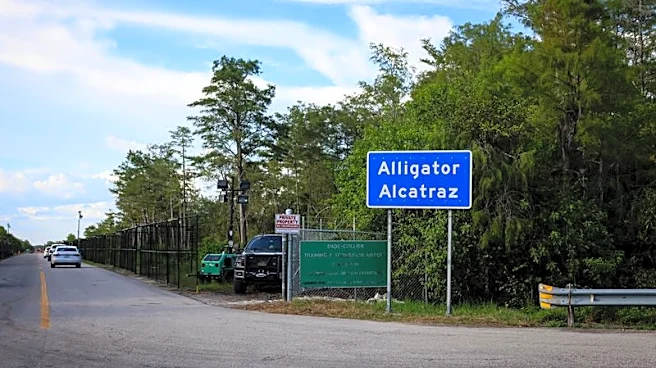
The immigration detention center known as Alligator Alcatraz in the Florida Everglades has been vacated, with Immigration and Customs Enforcement (ICE) confirming the transfer of detainees. The agency did not disclose the number of people moved or their
new locations. The facility, which opened in July 2025, has been under scrutiny for alleged abuses and costs state taxpayers approximately $1.2 million daily. The relocation is described as a precautionary measure for hurricane season, but it follows months of criticism and legal challenges. Attorneys representing detainees report that their clients have been moved to various states, including Florida, California, Arizona, Louisiana, and Texas, often without prior notice to families or legal counsel.
Why It's Important?
The closure of Alligator Alcatraz highlights ongoing concerns about the treatment of detainees and the transparency of ICE operations. The facility's high operational costs and allegations of abuse have drawn criticism from human rights organizations and legal advocates. The relocation of detainees without notice raises issues about access to legal representation and family contact, potentially impacting the rights and well-being of those affected. The situation underscores the broader debate over immigration detention practices in the U.S., with calls for policy reforms and increased oversight.
What's Next?
The future of the Alligator Alcatraz facility remains uncertain, with no official announcement on whether its closure is permanent. Legal and human rights groups are likely to continue advocating for the permanent shutdown of such facilities and for reforms in immigration detention practices. The situation may prompt further legal actions and policy discussions at both state and federal levels, as stakeholders seek to address the systemic issues highlighted by this case.