









What's Happening?
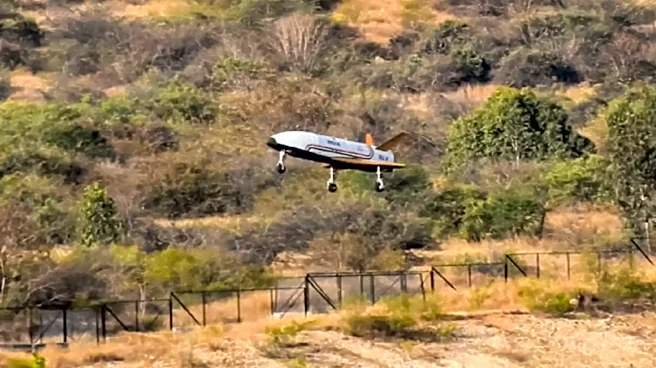
Boeing has successfully completed the second test flight of its unmanned, carrier-based MQ-25 Stingray on July 10, 2026. The test was conducted at MidAmerica St. Louis Airport in Illinois, in collaboration with U.S. Navy air vehicle pilots. The flight tested
the MQ-25's propulsion, subsystems, guidance, and flight controls, crucial for both landing gear up and down phases. This follows the MQ-25's first operational test flight in April 2026, which led to its 'Milestone C' approval for low-rate initial production in May 2026. The U.S. Navy plans to award a contract for three aircraft in the summer of 2026, with options for additional units in subsequent lots.
Why It's Important?
The successful test flight of the MQ-25 Stingray marks a significant advancement in the U.S. Navy's capabilities, particularly in unmanned aerial operations. The MQ-25 is designed to enhance the Navy's carrier air wing by providing aerial refueling, which extends the range and endurance of manned aircraft. This development is crucial for maintaining the U.S. military's strategic advantage and operational flexibility. The move towards unmanned systems reflects a broader trend in military technology, aiming to reduce risks to human pilots and increase operational efficiency. The MQ-25's integration into the fleet could set a precedent for future unmanned systems in naval operations.
What's Next?
Following the successful test flights, Boeing plans to continue testing the MQ-25 with additional flights out of MidAmerica St. Louis Airport. The U.S. Navy's fiscal year 2027 budget includes plans for further procurement of the MQ-25, with three units planned for 2027 and a total of 29 across the Future Years Defense Program. The application of U.S. Navy livery to the MQ-25 is also anticipated. As the program progresses, the Navy will likely focus on integrating the MQ-25 into its carrier operations, potentially influencing future procurement and development of unmanned systems.