







What's Happening?
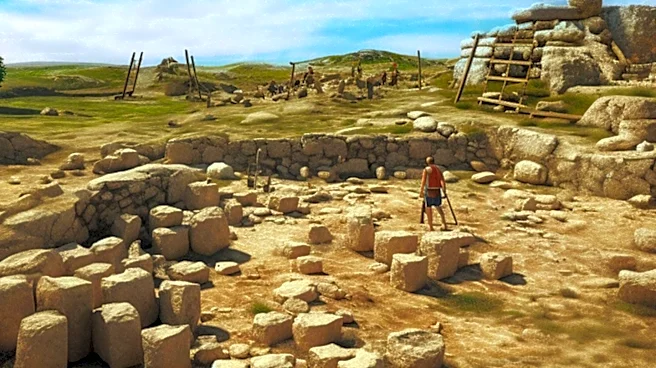
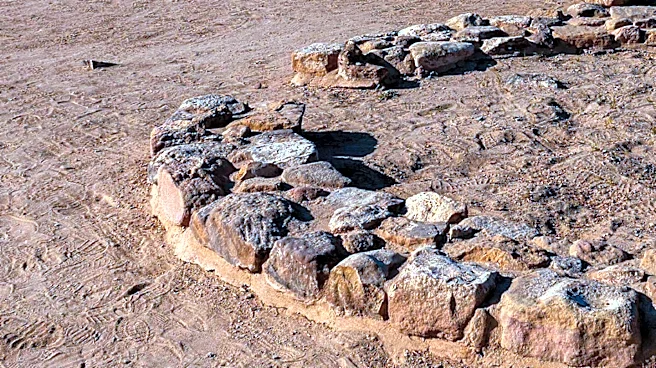
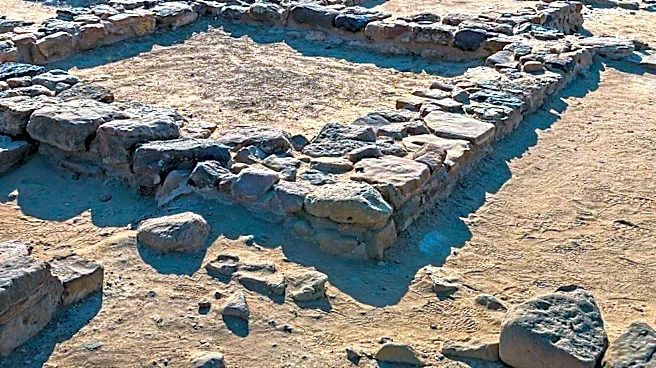
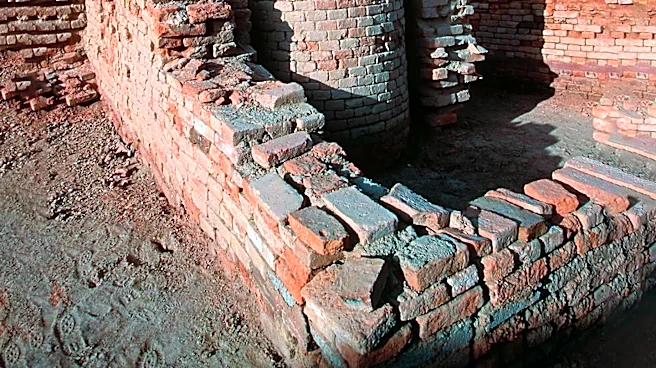
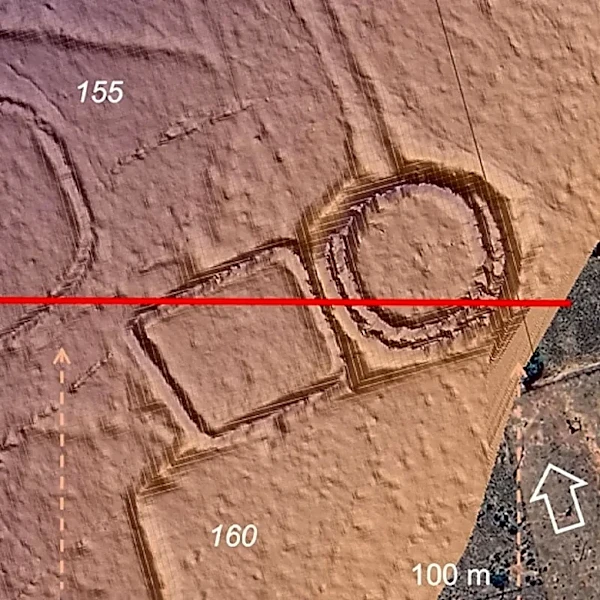
Recent archaeological discoveries at Zhaigou in northern Shaanxi, China, have unveiled a complex society that existed during the Yinxu period, approximately 1300 to 1050 BC. The site features monumental architecture, elite tombs, and evidence of bronze
casting, indicating a socially stratified and politically organized community. The findings challenge previous views of the Loess Highland as a marginal zone, showing that it was home to independent societies with extensive regional connections. The Zhaiyuangai architectural complex, with its ceremonial and administrative functions, highlights the area's significance.
Why It's Important?
The Zhaigou findings are significant as they reshape the understanding of social and political development in ancient China. They demonstrate that complex societies in the Loess Highland developed independently, maintaining autonomy while engaging in trade and cultural exchanges with neighboring regions. This challenges the notion that Shang-style artifacts indicate direct Shang political control, suggesting instead a model of cultural adoption and adaptation. The discoveries provide insights into the diversity of ancient Chinese civilizations and their interactions, contributing to a more nuanced understanding of early Chinese history.