








What's Happening?
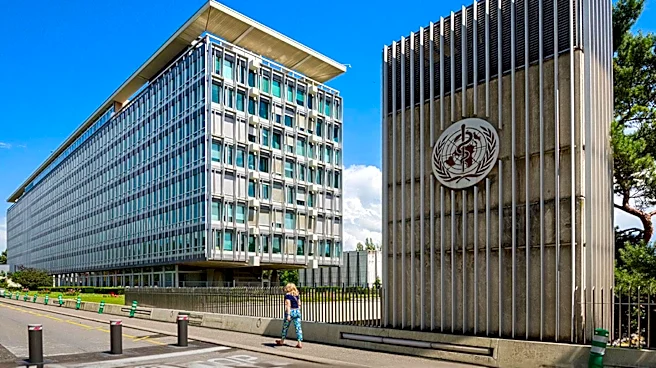
The World Health Organization (WHO), in collaboration with Tsinghua University’s Global Development and Health Communication Center, has introduced a new set of tools called BRIDGE (Behavioural Research and Intelligence for Directed Guidance in Emergencies).
These tools are designed to help countries in the WHO Western Pacific Region, including China, listen to communities in real-time during health emergencies and tailor their responses accordingly. BRIDGE is an advancement in WHO’s risk communication and community engagement (RCCE) methodologies, aiming to ensure that health awareness and response campaigns are built on understanding community concerns and needs. The initiative emphasizes that effective emergency responses must originate from community listening, as highlighted by Dr. Gina Samaan, WHO Regional Emergency Director for the Western Pacific.
Why It's Important?
This initiative is crucial for improving the effectiveness of public health interventions, particularly in emergency situations. By leveraging real-time community feedback, health authorities can address misinformation, alleviate fears, and provide relevant support, thereby building trust and increasing the likelihood of successful outcomes. The traditional top-down approach to health communication often fails to resonate with communities, leading to resistance or non-compliance. BRIDGE aims to reverse this by making communities central to the response planning, ensuring that resources are allocated where they are most needed and that messages are culturally appropriate and impactful. This shift can significantly enhance preparedness and response capabilities, ultimately saving lives and mitigating the broader societal and economic impacts of health crises.
What's Next?
The WHO is actively rolling out the BRIDGE tools across the Western Pacific Region, with a particular focus on low-resource settings. This includes training countries on how to effectively utilize these tools to embed community engagement within their national emergency responses. The initiative also involves leveraging artificial intelligence (AI) to quickly analyze community conversations from various sources, such as social media and surveys, to identify rumors, fears, and knowledge gaps. Future efforts will involve continued support for countries to implement these listening and response strategies, especially in the face of increasing climate-driven health threats. The goal is to ensure that when the next emergency arises, communities are empowered to help shape the response, leading to more effective and trusted public health actions.
Beyond the Headlines
The integration of AI and real-time community feedback into public health emergency responses represents a significant evolution in global health strategy. This approach not only enhances operational efficiency but also addresses ethical considerations by prioritizing community voices and needs. It acknowledges that health emergencies are not just medical events but also social phenomena deeply intertwined with public perception, trust, and behavior. By fostering a more participatory approach, BRIDGE can help bridge the gap between health authorities and the populations they serve, leading to more resilient and equitable health systems. This model could also serve as a blueprint for other regions and types of crises, promoting a more human-centered approach to public health globally.