







What's Happening?
The Student Debt Crisis Center (SDCC) has issued a statement emphasizing that student debt must be an integral part of any discussion regarding affordability in the United States. According to Natalia Abrams, SDCC President, voters have sent a clear message
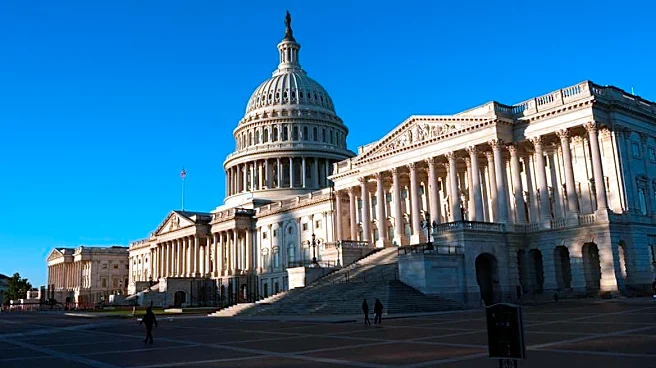
about the importance of affordability, and addressing student debt is crucial to responding to this mandate. Abrams stated that borrowers expect the newly elected Congress to tackle the student debt crisis and implement measures to make student loan payments more manageable. The SDCC asserts that the 120th Congress has a significant opportunity and responsibility to fulfill promises related to affordability, advocating for student loan borrowers to have a voice in policy-making and for the development of tangible solutions to alleviate their financial burdens.
Why It's Important?
This statement highlights the significant and ongoing impact of student debt on the financial well-being of millions of Americans, underscoring its role as a critical component of the broader affordability crisis. By linking student debt directly to voter sentiment on affordability, the SDCC aims to elevate the issue on the legislative agenda. The call for congressional action reflects the widespread financial strain experienced by borrowers, which can affect their ability to purchase homes, start businesses, or save for retirement, thereby impacting the national economy. Addressing student debt could stimulate economic growth by freeing up disposable income and reducing financial stress for a large segment of the population. Conversely, inaction could exacerbate existing economic inequalities and continue to hinder the financial progress of many households, potentially leading to broader economic instability.
What's Next?
The SDCC's statement signals continued advocacy efforts aimed at pressuring the newly elected Congress to prioritize student debt relief and affordability measures. This could involve renewed calls for legislative action on student loan forgiveness, interest rate reforms, or more robust income-driven repayment plans. Stakeholders, including student advocacy groups, will likely engage with lawmakers to propose specific policy solutions and share borrower experiences. The response from Congress will depend on political will, economic conditions, and the ability of advocates to build bipartisan consensus. Borrowers will be closely watching for any legislative proposals or administrative actions that could alleviate their financial burdens, while the broader public will observe how policymakers address this persistent economic challenge.
Beyond the Headlines
The emphasis on student debt as a core affordability issue points to deeper systemic challenges within the U.S. economic and educational landscape. It raises questions about the escalating cost of higher education, the accessibility of quality education, and the long-term economic consequences of a debt-financed education system. The SDCC's advocacy also touches upon the social contract between citizens and their government, particularly regarding access to opportunity and economic mobility. Failure to address student debt could perpetuate intergenerational wealth gaps and limit the potential of a significant portion of the workforce. Conversely, meaningful reforms could not only provide immediate relief to borrowers but also foster a more equitable and economically dynamic society, potentially reshaping the future of higher education financing and access.