




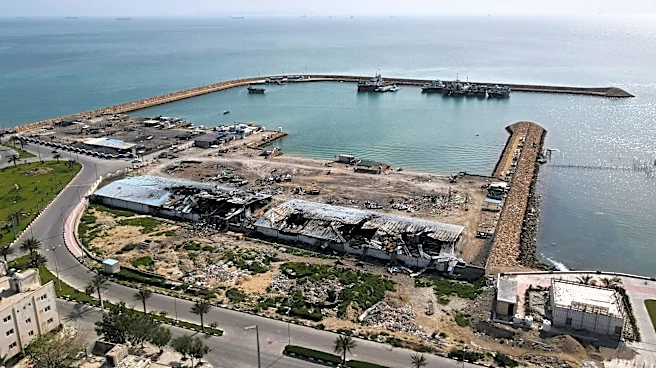
What's Happening?
President Trump has issued a stern warning to Iran, stating that the United States will not be blackmailed by Tehran's actions in the Strait of Hormuz. This statement comes after Iran attempted to close the strategic waterway on April 18th, warning mariners
that the route was shut and that at least two vessels were under fire. The Strait of Hormuz is a critical passage for global oil shipments, and its closure could have significant implications for international trade and energy markets. President Trump's comments underscore the U.S. government's position on maintaining open navigation in international waters and preventing any attempts by Iran to disrupt maritime traffic.
Why It's Important?
The closure of the Strait of Hormuz by Iran poses a significant threat to global oil supply, as a substantial portion of the world's petroleum passes through this narrow waterway. Any disruption could lead to increased oil prices and economic instability, affecting not only the U.S. but also global markets. President Trump's firm stance highlights the geopolitical tensions between the U.S. and Iran, emphasizing the importance of maintaining freedom of navigation in international waters. The situation also reflects broader U.S. foreign policy objectives in the Middle East, where ensuring the security of key maritime routes is a priority.
What's Next?
The U.S. is likely to increase its naval presence in the region to ensure the Strait of Hormuz remains open and secure. This could involve diplomatic efforts to rally international support against Iran's actions, as well as potential military measures to deter further attempts at closure. The international community, particularly countries reliant on oil imports through the strait, may also engage in diplomatic discussions to address the situation. The response from Iran and its allies will be closely monitored, as any escalation could lead to broader regional conflicts.