



What's Happening?
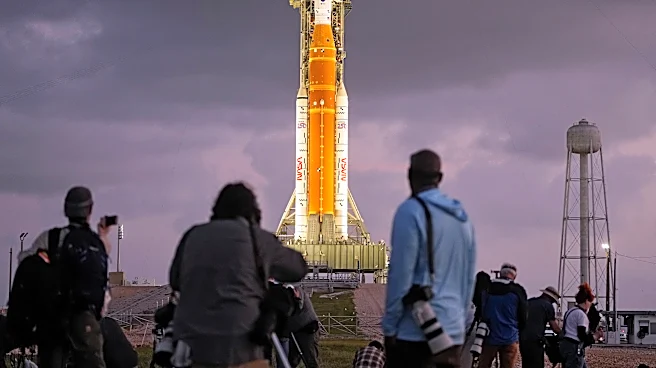
A senior astronomer has raised concerns about the potential for unregulated commercial activity in NASA's Artemis program. Mike Lockwood, president of the U.K.'s Royal Astronomical Society, emphasized the need for clear international rules to govern the return
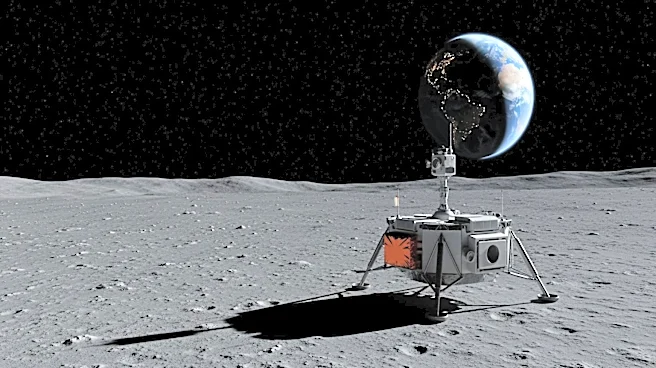
of humans to the Moon. He warned against a 'frontier mentality' that could lead to an 'interplanetary Wild West.' Lockwood highlighted the risks of commercial interests undermining existing space laws, particularly regarding the mining of the Moon. The Artemis program, which aims to expand human exploration beyond low-Earth orbit, has been widely welcomed but also poses significant geopolitical challenges.
Why It's Important?
The concerns raised by Lockwood underscore the need for updated international space governance as human activities in space increase. The Artemis program, while a significant step in space exploration, also brings to the forefront issues of space law and the potential for commercial exploitation of celestial bodies. The program's success could lead to economic opportunities, but it also necessitates a framework to ensure sustainable and equitable use of space resources. The debate highlights the geopolitical implications of space exploration, as the program does not include major space-faring nations like China and Russia.
Beyond the Headlines
Lockwood's comments suggest parallels with the Antarctic Treaty, which banned territorial claims and military activity. As space becomes more crowded, there is a growing need for a new international treaty to address issues like space debris and commercial exploitation. The Artemis program presents an opportunity to forge such a treaty, but achieving global consensus may be challenging given current geopolitical tensions. The program's focus on international collaboration, excluding some major players, could influence future space diplomacy and governance.