

What's Happening?
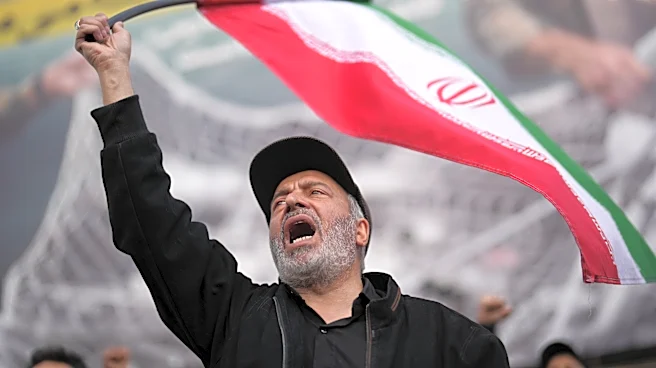
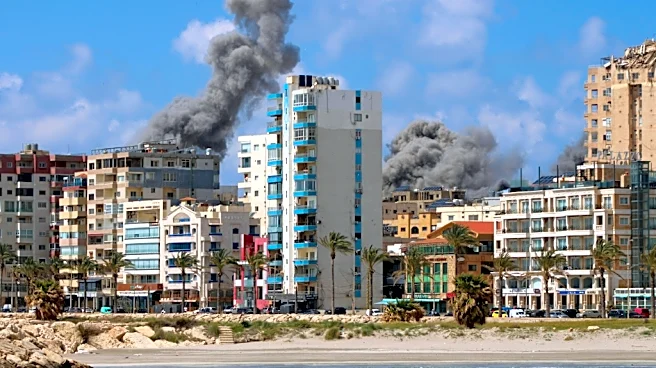
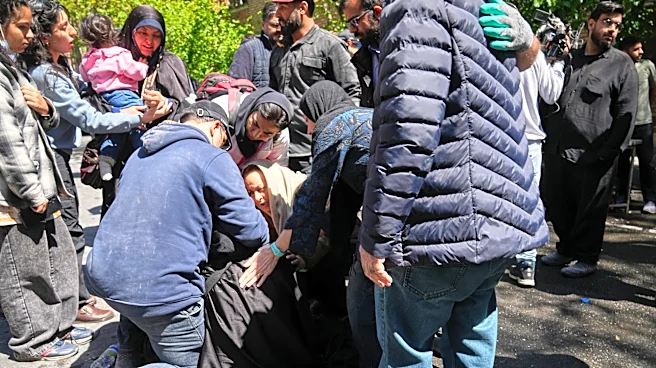
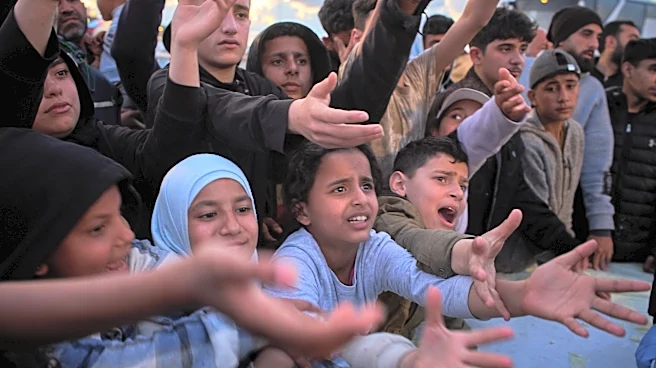
Crowds in Tehran celebrated a two-week ceasefire between Iran and the United States, marking a pause in a conflict that has lasted 40 days. Demonstrators gathered in public squares, burning U.S. and Israeli flags and chanting anti-American slogans. The
ceasefire was brokered by Pakistan and comes just before President Trump's deadline for Iran to reach a deal. The agreement has led to a temporary easing of tensions, with global oil markets stabilizing as a result. However, there are conflicting interpretations of the ceasefire terms, with Iran and the U.S. presenting different versions of what was agreed upon.
Why It's Important?
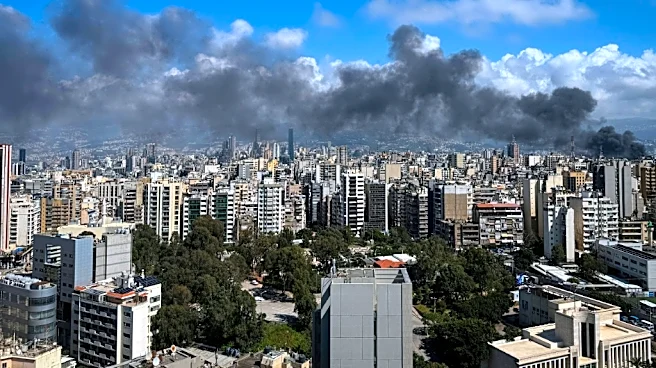
The ceasefire is significant as it temporarily halts a conflict that threatened to escalate into a broader regional war. The differing interpretations of the agreement highlight the complexities of U.S.-Iran relations and the challenges in reaching a lasting peace. The ceasefire's impact on global oil markets underscores the interconnectedness of geopolitical events and economic stability. The celebrations in Iran reflect a sense of national pride and resilience, but also point to the deep-seated tensions that remain unresolved.
What's Next?
Negotiations are expected to continue, with delegations from both countries scheduled to meet in Islamabad. The outcome of these talks will be crucial in determining whether the ceasefire can lead to a more permanent resolution. The international community will be closely monitoring the situation, as any breakdown in talks could reignite hostilities. The U.S. and its allies will need to navigate the delicate balance of diplomacy and military readiness in the region.