






What's Happening?
ConocoPhillips and Ducks Unlimited (DU) have announced a continued partnership for 2026, focusing on coastal wetland restoration efforts in Louisiana. ConocoPhillips is contributing $1 million to support DU’s Gulf Coast Initiative. This collaboration
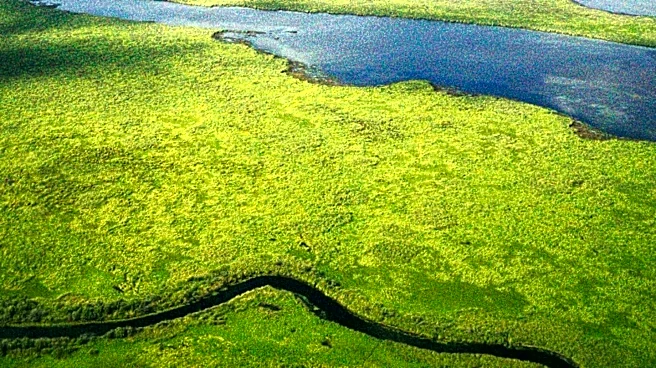
will concentrate on conservation projects within the Terrebonne and Barataria basins, addressing marsh enhancement, freshwater management, shoreline protection, and long-term monitoring. These initiatives aim to restore and protect vital habitats for migratory and resident waterfowl, fisheries, and other wetland-dependent wildlife, while also bolstering coastal communities. The 2026 work plan includes three main restoration strategies: marsh enhancement through terracing and marsh creation or ridge restoration; hydrologic improvements and water control structures for healthy freshwater systems; and shoreline protection using living shoreline features to stabilize vulnerable coastal areas. The partnership also plans expanded monitoring and assessment, including collaborations with universities and research institutions to evaluate project outcomes and habitat use by non-migratory waterfowl species.
Why It's Important?
This renewed partnership is significant for environmental stewardship and community resilience in Louisiana's vulnerable coastal regions. The $1 million contribution from ConocoPhillips, combined with over $14 million in funding leveraged since 2012, has already facilitated over $62 million in coastal restoration work, benefiting tens of thousands of acres of wetlands. This ongoing investment is crucial for unlocking additional federal, state, and private funding, thereby significantly expanding the scope and impact of conservation efforts. The projects directly address the degradation of critical wetland habitats, which are essential for biodiversity and serve as natural buffers against storm surges, protecting coastal communities and infrastructure. The focus on science-based conservation solutions ensures that the efforts are effective and sustainable, contributing to the long-term ecological health and economic stability of the region.
What's Next?
The 2026 partnership will proceed with the outlined restoration strategies, including marsh enhancement, hydrologic improvements, and shoreline protection in the Terrebonne and Barataria basins. Expanded monitoring and assessment efforts will be a key component, involving collaboration with universities and research institutions to evaluate project outcomes and habitat use. This data will be crucial for refining future conservation strategies and demonstrating the effectiveness of the initiatives. The continued financial commitment from ConocoPhillips is expected to attract further funding from various sources, potentially leading to an expansion of the program's reach and impact in subsequent years. The success of these projects will likely influence future corporate-environmental partnerships and conservation models in other coastal regions facing similar challenges.
Beyond the Headlines
The collaboration between ConocoPhillips, an energy company, and Ducks Unlimited, a conservation organization, highlights a growing trend of cross-sector partnerships addressing environmental challenges. This model demonstrates how industries can contribute to ecological preservation, moving beyond traditional corporate social responsibility to direct, impactful environmental action. The focus on Louisiana's coastal wetlands underscores the critical national issue of land loss and its implications for ecosystems, economies, and communities. This partnership also implicitly acknowledges the long-term value of natural infrastructure in mitigating climate change impacts and protecting human settlements. The involvement of universities and research institutions in monitoring and assessment emphasizes a commitment to scientific rigor and data-driven conservation, setting a precedent for accountability and effectiveness in large-scale environmental projects.