


What's Happening?
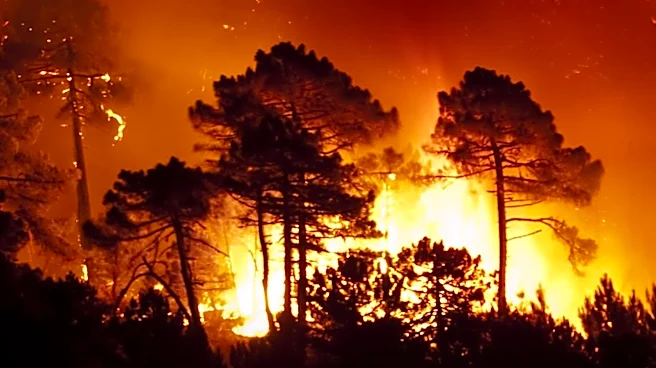
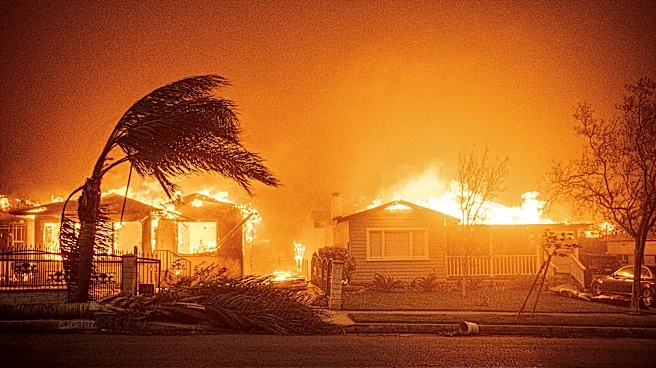
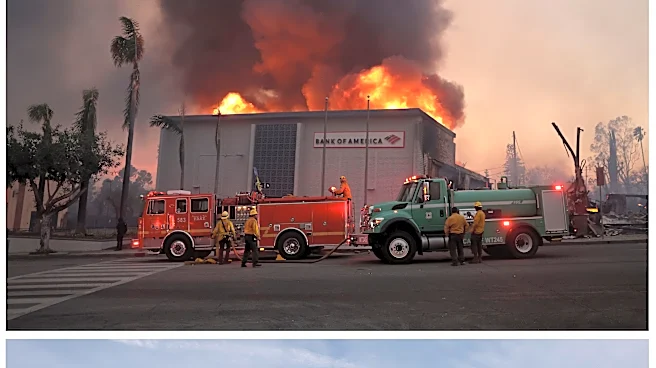
A recent investigation has attributed the deadly Eaton Fire in Southern California to an electrical arc from a Southern California Edison transmission tower. The fire, which occurred in January 2025, devastated communities in the San Gabriel Mountains,
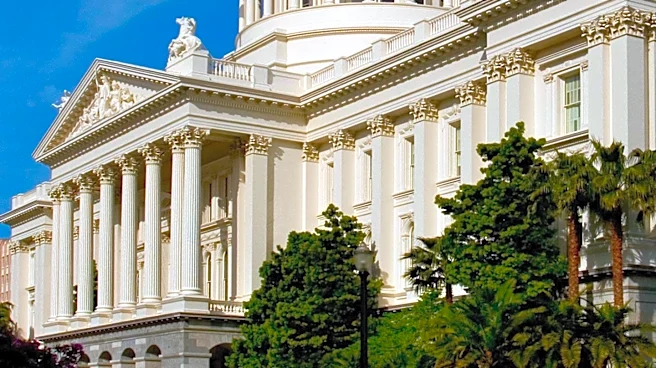
destroying over 9,000 homes and claiming 19 lives. Governor Gavin Newsom's administration is seeking to limit the financial liability of utilities like SoCal Edison for wildfires caused by their equipment. This move has sparked a debate over who should bear the financial burden of such disasters, with insurers, lawyers, and fire victims opposing the proposed limitations.
Why It's Important?
The issue of utility liability in wildfire disasters is critical as it affects the financial stability of both utilities and fire victims. Utilities like SoCal Edison are state-regulated monopolies, and their financial health is essential for maintaining vital services. However, limiting their liability could shift the financial burden onto customers, who already face high power rates. The debate highlights the need for a balanced approach that protects both utility viability and victim compensation. The outcome of this debate could set a precedent for how California handles future wildfire-related liabilities.
What's Next?
The California Legislature will need to address the complex issue of utility liability in wildfire disasters. Governor Newsom's proposal to limit liability is likely to face significant opposition from insurers, lawyers, and fire victims. The debate may lead to legislative action that seeks to balance the interests of utilities, customers, and victims. A potential solution could involve creating a statewide insurance policy to cover wildfire damages, similar to existing funds for other natural disasters. The resolution of this issue will have long-term implications for California's approach to managing wildfire risks and utility regulation.