






What's Happening?
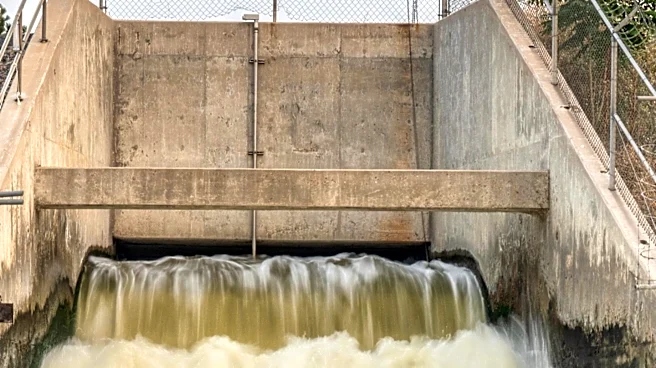
Researchers at the University of Pittsburgh's Swanson School of Engineering have developed a decision-support framework to address the issue of combined sewer overflows (CSO) in older cities like Pittsburgh. These overflows occur when heavy rains overwhelm
aging sewer systems, leading to untreated sewage being discharged into waterways. The new framework identifies cost-effective, energy-efficient, and low-emission treatment systems for captured stormwater, based on its intended use. This approach, known as the 'One Water' strategy, treats all water sources as interconnected, allowing for stormwater to be repurposed for various uses such as irrigation, industrial processes, and surface-water recharge.
Why It's Important?
The development of this framework is crucial for cities with outdated infrastructure that struggle with frequent and heavy storms. By repurposing stormwater, cities can reduce the environmental impact of sewage overflows and make better use of available water resources. This not only helps in managing urban water cycles more sustainably but also offers a cost-effective alternative to traditional water treatment methods. The framework's adaptability to different cities' needs makes it a valuable tool for urban planners and policymakers aiming to improve water management and reduce pollution.
What's Next?
The framework developed by the University of Pittsburgh can be applied to other cities with similar infrastructure challenges. As cities adopt this approach, it could lead to widespread improvements in urban water management and a reduction in the environmental impact of sewage overflows. The research team plans to continue refining the framework and exploring additional applications for stormwater reuse, potentially influencing future urban planning and environmental policies.