



What's Happening?
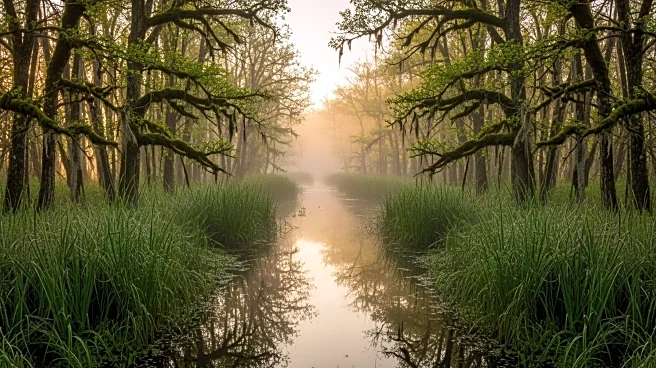
Swamps, often associated with recreation and wildlife, play a crucial role in providing essential ecosystem services that support environmental stability and protect communities. These wetland systems act as natural sponges, absorbing excess rainfall
and slowing stormwater runoff, which is vital during heavy rain events and hurricanes. This natural buffering effect helps limit flooding impacts and eases the strain on engineered drainage systems. Additionally, swamps contribute to coastal protection by stabilizing soil and reducing erosion through their vegetation. They also improve water quality by filtering pollutants and support biodiversity by providing habitats for various species. The importance of swamps extends to carbon storage, climate regulation, and cultural value, making them integral to regional identity and environmental education.
Why It's Important?
The significance of swamps in flood mitigation and environmental stability is profound, especially in the context of increasing human activity that pressures wetland systems through development and pollution. When swamps are degraded, the ecosystem services they provide diminish, leading to increased flood risk, declining water quality, and fragmented wildlife habitats. Conservation and responsible land management are crucial to maintaining these services. Restoration efforts that reestablish natural hydrology and vegetation are essential for recovering lost ecosystem services. Educating communities about the functions and importance of swamps can increase support for conservation initiatives, ensuring these ecosystems continue to provide vital services that support environmental stability and community well-being.
What's Next?
Future efforts will likely focus on enhancing restoration projects to recover lost ecosystem services and improve outcomes through long-term monitoring and adaptive management. Increasing public awareness and education about the ecological importance of swamps can foster greater appreciation and support for conservation efforts. As discussions around sustainability and climate resilience continue, swamps will remain central to regional strategies, emphasizing their role in flood protection, water purification, and climate moderation. Maintaining healthy wetlands will be crucial for resilience across coastal regions, ensuring these ecosystems can adapt to environmental changes and human influence.
Beyond the Headlines
Swamps are dynamic systems that respond to environmental changes and human influence. Their ability to adapt depends on space, connectivity, and protection from excessive disturbance. Recognizing the unseen processes that support life and protect landscapes every day is essential for appreciating the full value of swamps. These ecosystems provide flood protection, water purification, habitat, carbon storage, and climate moderation, supporting environmental stability and community well-being. As conversations around sustainability and climate resilience continue, the preservation of swamp ecosystems will be vital for long-term environmental balance and regional strategies.