
What's Happening?
A study conducted by Concordia University has revealed significant declines in snowpack in the Canadian Rockies, which could have far-reaching effects on water resources and the economy. The research,
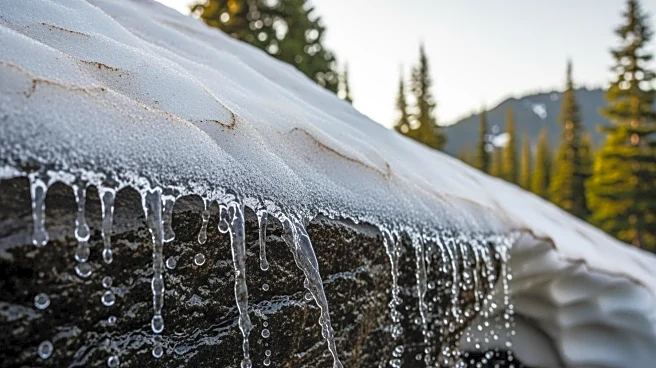
published in the journal 'Communications Earth and Environment,' indicates that the usable water from snowpacks has decreased sharply in critical areas of the Canadian Rockies. These regions serve as headwaters for major rivers in British Columbia and the Prairies, essential for communities and ecosystems. The study, led by Associate Professor Ali Nazemi, describes this phenomenon as a 'creeping snow drought,' posing a threat to Canada's water supply. The researchers analyzed snowpack data from 2000 to 2019, finding that three percent of Canada's land mass, particularly in the Rockies, experienced declines. This reduction in snowpack has already led to real-world consequences, such as water shortages in British Columbia's Okanagan region and disruptions in the shipping industry in Ontario and Quebec.
Why It's Important?
The findings of this study underscore the critical role of snowpack in maintaining water resources and supporting economic activities. The decline in snowpack in the Canadian Rockies could lead to water shortages, affecting agriculture, hydroelectric power generation, and wildlife. For instance, past droughts linked to low snowpack have resulted in water shortages that impacted sockeye salmon populations and strained hydroelectric power generation. The study highlights the need for rethinking water management strategies to adapt to these changes. As snowpack decreases, the availability of meltwater, crucial for replenishing water bodies like the Great Lakes, is also reduced, potentially leading to economic disruptions in shipping and other industries. The research calls for better assessment methods at local levels to address these challenges effectively.
What's Next?
The study suggests that if current trends continue, there could be significant implications for water management and economic activities in Canada. The Canada Water Agency and the Global Institute for Water Security are working to address future water scarcity issues. However, there is a need for improved local-level assessments to understand the specific impacts on communities, farms, and ecosystems. The research emphasizes the importance of developing new strategies to manage water resources in light of changing snowpack patterns. As climate change continues to alter weather patterns, it is crucial for policymakers and stakeholders to consider these findings in their planning and decision-making processes.
Beyond the Headlines
The decline in snowpack not only affects water availability but also has broader implications for environmental sustainability and economic stability. The study highlights the complex interplay between climate change and natural variability, which can lead to unpredictable changes in water resources. This situation calls for a reevaluation of current water management practices and the development of adaptive strategies to ensure the resilience of ecosystems and economies. The research also points to the need for increased collaboration between government agencies, researchers, and local communities to address these challenges effectively.